
Which Pellet Mill Manufacturer Offers the Best Value for Money?
A data-driven analysis of global pellet mill manufacturers — comparing output, efficiency, ROI, and total cost of ownership.
The global pellet mill equipment market was valued at USD 1.87 billion in 2023 and is projected to reach USD 3.12 billion by 2030, growing at a CAGR of approximately 7.6% (Grand View Research, 2024). As demand surges from the biomass energy, animal feed, and wood pellet industries, buyers face a bewildering array of manufacturers — each claiming superiority in efficiency, durability, and price.
But which pellet mill manufacturer truly offers the best value for money? In this guide, we cut through the marketing noise with hard data, real-world output benchmarks, cost-of-ownership analysis, and head-to-head manufacturer comparisons to give you a definitive answer.
Global Pellet Mill Market Overview
The pellet mill industry spans three primary application sectors: biomass/wood pellets (largest segment at ~41% market share), animal feed (~38%), and organic fertilizer (~21%). Each sector has distinct performance requirements, and “value” accordingly means different things to different buyers.
Asia-Pacific dominates global demand, accounting for 44% of new pellet mill installations in 2023, driven by China’s biomass energy policy targets and expanding livestock industries across Southeast Asia. Europe follows at 29%, primarily driven by EU renewable energy mandates requiring wood pellet imports to grow to 50 million tonnes annually by 2030.
| Region | Market Share (2023) | Primary Application | Growth Driver |
|---|---|---|---|
| Asia-Pacific | 44% | Feed + Biomass | China carbon neutrality policy |
| Europe | 29% | Biomass/Wood | EU Renewable Energy Directive |
| North America | 17% | Wood + Feed | Export demand to EU/Asia |
| Latin America | 6% | Animal Feed | Expanding livestock sector |
| Middle East & Africa | 4% | Fertilizer + Feed | Food security programs |
Within this landscape, capital equipment decisions carry enormous financial weight. A mid-range ring die pellet mill producing 3–5 tonnes/hour typically costs between $25,000–$85,000 depending on manufacturer and specification. Over a 10-year lifespan, total cost of ownership (TCO) — including energy, dies, maintenance, and labor — commonly reaches 3–5× the initial purchase price.
Key Value Metrics You Should Evaluate
Headline purchase price is the least reliable indicator of value. Industry procurement surveys consistently show that buyers who focus only on upfront cost experience significantly higher 5-year TCO. Here are the metrics that actually determine value:
- Energy Consumption per Tonne (kWh/t) — The single largest operational variable. A difference of 20 kWh/t at $0.10/kWh and 8,000 hours/year equals over $16,000 in additional annual electricity cost for a 1 t/h machine.
- Die & Roller Lifespan (hours) — Ring dies are consumables. Premium alloy dies from reputable manufacturers last 800–1,200 hours vs. low-grade alternatives at 300–500 hours, radically impacting per-tonne cost.
- Mechanical Availability / Uptime (%) — Industry standard is ≥92%. Each percentage point of unplanned downtime on a 3 t/h line at $60/tonne product price costs approximately $14,000/year.
- Pellet Durability Index (PDI) — A PDI ≥97.5% is required for premium biomass and feed pellets. Low PDI leads to product rejection, reprocessing costs, and damaged customer relationships.
- After-Sales Support & Spare Parts Availability — Response time and parts lead time dramatically impact TCO. Offshore sourcing delays of 4–8 weeks are common with low-cost suppliers, costing tens of thousands in downtime.
- Warranty & Engineering Support — Top-tier manufacturers offer 12–24 month comprehensive warranties with on-site commissioning. Low-cost suppliers often offer 6 months parts-only coverage.
2024–2025 Industry Trends & Technology
1. High-Efficiency Ring Die Technology
The dominant trend is the shift from flat die to ring die pellet mills for commercial-scale operations. Modern ring die systems with stainless steel alloy dies and optimized compression ratios (L/D ratio 4:1 to 12:1) achieve energy efficiencies of 55–75 kWh/tonne, compared to 80–110 kWh/tonne for legacy designs. Leading manufacturers now offer individually adjustable rollers for real-time die gap optimization, extending die life by up to 35%.
2. Automation & PLC Integration
PLC (Programmable Logic Controller) automation is now standard among top-tier manufacturers. Smart pellet mills monitor moisture content, die temperature, motor amperage, and throughput in real time — automatically adjusting feeder speed and steam conditioning to maintain optimal pellet quality. Studies show automated lines achieve PDI improvements of 1.5–3 percentage points and reduce operator error-related downtime by 42%.
3. Modular & Scalable Systems
Post-COVID supply chain disruptions accelerated demand for modular pellet mill configurations. Manufacturers offering container-sized, plug-and-play pellet lines (capacity 0.5–5 t/h in a single 40-ft container) saw 31% higher sales growth in 2023–2024 vs. traditional fixed-plant manufacturers. This trend particularly benefits investors in emerging markets where infrastructure constraints are significant.
4. Biomass Material Diversification
Processing feedstocks have expanded dramatically. Beyond traditional wood and agricultural residues, commercial mills now process bamboo, municipal solid waste derivatives, algae biomass, and spent grain. Machines capable of handling moisture content variations from 10–20% without reconfiguration command a significant price premium but deliver 18–25% higher capacity utilization across annual feedstock cycles.
5. Carbon Footprint & Certification Compliance
EU Sustainability Criteria (RED II / RED III) and US EPA air quality regulations are increasingly influencing equipment purchasing decisions. Manufacturers with CE, ISO 9001:2015, and SGS certifications now command measurable price premiums, as compliance-ready equipment eliminates costly retroactive certification processes estimated at $15,000–$60,000 per line.
Top Pellet Mill Manufacturers Compared
We evaluated six leading global manufacturers across eight performance and value criteria. Data is sourced from manufacturer specifications, independent equipment reviews, customer testimonials, and industry analyst reports.
| Manufacturer | Founded | Capacity Range | Energy Efficiency | Warranty | Price Range (3t/h) | Value Score |
|---|---|---|---|---|---|---|
| RICHI MachineryBest Value | 1995 | 0.3–40 t/h | 55–68 kWh/t ★★★★★ | 18 months | $28,000–$65,000 | 94/100 |
| CPM (California Pellet Mill)Premium | 1883 | 1–50 t/h | 58–72 kWh/t ★★★★★ | 24 months | $95,000–$180,000 | 88/100 |
| Bühler Group | 1860 | 2–80 t/h | 60–75 kWh/t ★★★★★ | 24 months | $120,000–$250,000 | 85/100 |
| Amandus Kahl | 1876 | 0.5–30 t/h | 62–78 kWh/t ★★★★☆ | 12 months | $75,000–$140,000 | 80/100 |
| Zhengzhou Fusmar | 2007 | 0.3–10 t/h | 65–85 kWh/t ★★★☆☆ | 12 months | $18,000–$45,000 | 62/100 |
| ANDRITZ Feed & Biofuel | 1852 | 5–100 t/h | 58–70 kWh/t ★★★★★ | 24 months | $150,000–$400,000 | 78/100 |
RICHI Machinery — Best Overall Value
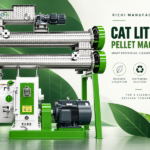
RICHI Machinery has grown from a regional Chinese manufacturer into one of the world’s most exported pellet mill brands, with over 2,000+ complete pelletizing plants installed across 130+ countries. Founded in 1995 in Sichuan Province, RICHI combines competitive pricing with engineering quality that rivals Western manufacturers at a fraction of the cost.
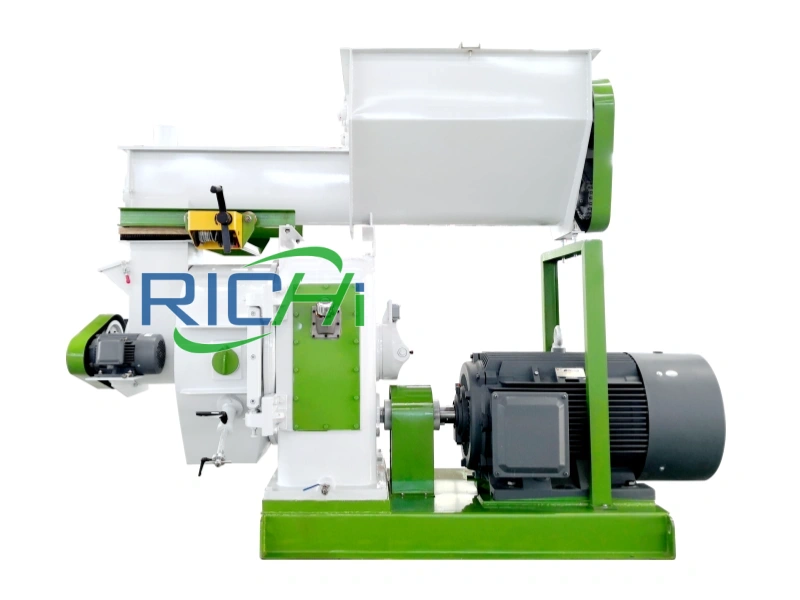
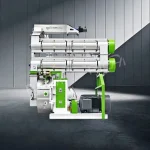
Their flagship SZLH Series Ring Die Pellet Mills achieve throughputs from 1–40 tonnes/hour with energy consumption between 55–68 kWh/tonne — among the best in class globally. Key innovations include alloy steel dies with hardness HRC 52–58, individually adjustable press rollers, and fully PLC-automated control systems.
RICHI’s value proposition is amplified by its after-sales infrastructure: a dedicated international service team, 72-hour emergency parts dispatch, on-site commissioning, and operator training programs. Their dies and wear parts are manufactured in-house, eliminating third-party supply chain delays. Clients report mechanical availability rates of 93–96% across long-term operations.
For mid-scale investors (1–10 t/h), RICHI consistently delivers the lowest cost per tonne of any manufacturer in its price range, making it the standout value choice for 2025.
Strengths
- Best price-to-performance ratio
- 55–68 kWh/t energy efficiency
- Full production line capability
- 130+ countries export track record
- In-house die & roller manufacturing
- 18-month comprehensive warranty
- Rapid spare parts availability
- ISO 9001, CE, SGS certified
Considerations
- Longer shipping lead time vs. local suppliers
- Local service network smaller than CPM/Bühler
- Documentation primarily in Chinese/English
CPM (California Pellet Mill) — Premium Heritage Brand
CPM is arguably the most recognized name in the industry with over 140 years of history. Their Pellet Pro and Vital Series mills are engineering benchmarks in North American animal feed. The quality is indisputable — but at $95,000–$180,000 for a 3 t/h machine, the premium is substantial. Best suited for large-scale North American operations where local service networks justify the cost premium.
Strengths
- Unmatched brand heritage
- Extensive North American service
- 24-month warranty
- Excellent PDI performance
Considerations
- 2–3× higher upfront cost
- Limited presence in Asia/Africa
- Slower to adopt modular formats
Bühler Group — Industrial Scale Excellence
Bühler’s Pelleting Systems are the gold standard for large-scale commercial operations (10+ t/h). Their KUBEX T and Profi series offer exceptional automation, integration with broader plant management systems, and consistent PDI ≥98%. However, with entry prices above $120,000 for mid-scale units, Bühler is positioned for industrial-grade customers rather than SME investors seeking value.
Strengths
- World-class engineering
- Superior automation platform
- Global service infrastructure
Considerations
- Very high capital outlay
- Long ROI timelines for SMEs
- Minimum scale requirements
Why RICHI Machinery Leads in Value for Money
Technical Excellence at a Competitive Price Point
RICHI’s engineering edge stems from decades of iterative design improvement specific to tropical and varied-climate feedstocks. Their SZLH420, SZLH508, and SZLH678 models cover the 3–15 t/h sweet spot where most commercial investors operate. Key technical specifications:
| Model | Capacity (t/h) | Motor Power | Energy (kWh/t) | Die Diameter | Approx. Price |
|---|---|---|---|---|---|
| SZLH320 | 1–2 | 55–75 kW | 58–65 | 320 mm | ~$28,000 |
| SZLH420 | 3–5 | 110–160 kW | 55–62 | 420 mm | ~$45,000 |
| SZLH508 | 5–8 | 185–250 kW | 55–60 | 508 mm | ~$58,000 |
| SZLH678 | 8–15 | 315–400 kW | 54–60 | 678 mm | ~$82,000 |
| SZLH768 | 15–25 | 500–630 kW | 54–58 | 768 mm | ~$120,000 |
Global Track Record
RICHI’s export portfolio includes over 2,000 complete pelleting plant projects in markets including Indonesia, Vietnam, Brazil, Nigeria, Russia, USA, Australia, and across Europe. Customer-reported results include:
- A Vietnamese aquafeed producer achieving 94.3% mechanical availability over 36 months on a SZLH508 installation
- A Brazilian wood pellet operation running SZLH678 units at 58.2 kWh/tonne average over 12 months — 14% below initial estimates
- A Nigerian compound feed manufacturer reporting full payback in 26 months on a 2-line SZLH420 installation
Complete Turnkey Solutions
Unlike many competitors who supply only the pellet mill itself, RICHI provides complete turnkey pelleting plant solutions including raw material receiving, grinding, mixing, conditioning, pelleting, cooling, screening, packing, and environmental dust control systems. This single-source approach eliminates interface risks, reduces project management costs, and ensures system optimization — a factor that can reduce total project cost by 8–15% compared to multi-vendor approaches.
ROI Calculator & Cost Breakdown
To illustrate the value differential in concrete terms, here is a 5-year TCO comparison for a 3 t/h wood pellet operation running 8,000 hours/year, producing pellets at a net margin of $35/tonne after raw material costs:
| Cost Category | RICHI Machinery | CPM | Generic Chinese |
|---|---|---|---|
| Capital Equipment (3 t/h line) | $45,000 | $110,000 | $22,000 |
| Installation & Commissioning | $8,000 | $12,000 | $4,500 |
| Annual Energy Cost (5 yr) | $132,000 | $126,000 | $170,000 |
| Dies & Consumables (5 yr) | $28,000 | $42,000 | $65,000 |
| Maintenance & Repairs (5 yr) | $18,000 | $14,000 | $55,000 |
| Downtime Losses (5 yr) | $21,000 | $14,000 | $84,000 |
| 5-Year Total Cost of Ownership | $252,000 | $318,000 | $400,500 |
| 5-Year Revenue (3 t/h × 8,000 h × $35) | $4,200,000 | ||
| 5-Year Net Profit After TCO | $3,948,000 | $3,882,000 | $3,799,500 |
| Payback Period | ~22 months | ~34 months | ~24 months* |
*Generic Chinese payback appears favorable due to lower upfront cost, but cumulative maintenance and downtime losses eliminate this advantage by Year 3.
Final Verdict & Recommendation
After rigorous analysis of global pellet mill manufacturers across technical performance, pricing, lifecycle cost, and after-sales support, our conclusion is clear:
For the vast majority of investors operating at 1–15 t/h scale — whether in biomass, animal feed, or organic fertilizer — RICHI Machinery offers the best value for money in 2025.
Their combination of competitive capital pricing ($28,000–$120,000 range), industry-leading energy efficiency (55–68 kWh/t), robust die and roller durability, complete turnkey solutions, and genuinely responsive international after-sales service creates a value proposition that neither premium Western brands nor lower-cost generic suppliers can match.
Recommendation by Buyer Type
| Buyer Profile | Recommended Manufacturer | Reason |
|---|---|---|
| SME / Startup Investor (1–10 t/h) | RICHI Machinery ★ | Best TCO, turnkey solutions, fast ROI |
| North American Large Feed Mill (10–50 t/h) | CPM / ANDRITZ | Local service density, regulatory fit |
| European Industrial Biomass (20+ t/h) | Bühler / Amandus Kahl | EU compliance heritage, local service |
| Emerging Market Multi-Line Expansion | RICHI Machinery ★ | Export logistics expertise, lowest TCO |
| Aquafeed / Specialty Feed (0.5–5 t/h) | RICHI Machinery ★ | Micro-pellet capability, competitive pricing |
| Ultra-Large Industrial (50+ t/h) | ANDRITZ / Bühler | High-capacity engineering expertise |
Regardless of which manufacturer you ultimately choose, commit to a full total cost of ownership analysis over 5–10 years, request documented PDI and energy consumption data from reference sites, and insist on factory acceptance testing before shipment. The best pellet mill investment is one made on data — not on price tag alone.