For decades, industries around the world have relied heavily on coal, fuel oil, and natural gas to power production facilities. While these fuels have supported economic growth, rising energy costs and increasingly strict environmental regulations are forcing businesses to reconsider their energy strategies.
Among the many renewable alternatives available today, biomass pellets have emerged as one of the most practical and scalable solutions. In particular, straw-based biomass pellets are attracting attention from industrial users seeking cleaner energy sources without sacrificing operational reliability.
What makes straw pellets an attractive option? How can manufacturers benefit from this growing market? And what technologies are required to produce high-quality biomass fuel at commercial scale?
This article explores the role of straw pellet production in the ongoing global energy transition.
The Growing Pressure on Industrial Energy Users
Industrial companies face a challenging combination of factors:
- Rising fossil fuel prices
- Carbon reduction targets
- Environmental compliance requirements
- Supply chain uncertainties
- Increasing public sustainability expectations
Many businesses are searching for fuel alternatives that can provide long-term cost stability while reducing environmental impact.
Biomass pellets offer several advantages:
- Renewable resource base
- Lower carbon footprint
- Easier transportation and storage
- Compatibility with many industrial boiler systems
- Predictable fuel characteristics
As a result, biomass fuel consumption continues to expand across power generation, district heating, food processing, textile manufacturing, and agricultural industries.
Why Straw Is an Ideal Feedstock
Agricultural straw is produced in enormous quantities every year.
Common feedstocks include:
- Wheat straw
- Rice straw
- Corn straw
- Barley straw
- Oat straw
- Rapeseed straw
Unlike wood resources, straw can be replenished annually through normal farming activities.
This provides a significant advantage in regions where agricultural production is strong but forestry resources are limited.
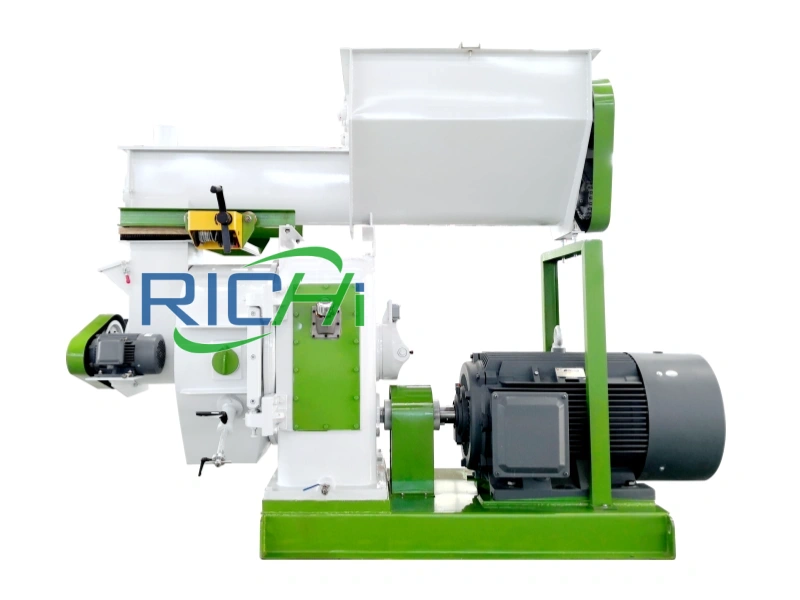
When properly processed, straw can be transformed into dense, durable pellets using a modern rice straw pellet making machine.
The resulting pellets offer improved combustion efficiency and handling characteristics compared to loose straw.
Solving the Challenges of Raw Straw
Despite its abundance, raw straw presents several logistical challenges.
Low Bulk Density
Loose straw occupies significant storage space.
Transportation costs can become prohibitively expensive when moving unprocessed material over long distances.
Moisture Variability
Moisture content changes depending on weather conditions, harvesting methods, and storage practices.
Excess moisture negatively affects combustion performance.
Handling Difficulties
Raw straw is difficult to feed consistently into industrial combustion systems.
Pelletization solves these issues by creating a standardized fuel product with:
- Higher density
- Lower moisture content
- Better flowability
- Improved storage stability
The Technology Behind Pellet Manufacturing
Modern biomass pellet production combines several processing stages to achieve optimal fuel quality.
Feedstock Preparation
Collected straw is first cleaned and processed into uniform particles.
Consistent particle size improves pellet quality and equipment efficiency.
Conditioning
Material moisture is adjusted to suitable levels before pelletizing.
Proper conditioning contributes to stronger pellet formation.
Pellet Production
The prepared material enters a pellet mill where pressure and friction compress biomass into cylindrical pellets.
High-quality equipment is essential for maintaining production stability.
Many investors evaluating biomass opportunities investigate a 5-6 T/H industrial straw pellet plant solution capable of serving medium and large-scale industrial markets.
These facilities can produce substantial volumes while maintaining product consistency.
Cooling and Screening
Fresh pellets are cooled and screened before storage.
This process enhances durability and minimizes fines.
Industrial Applications for Straw Pellets
The versatility of biomass pellets is one of their strongest advantages.
Industrial Boilers
Manufacturing facilities increasingly use biomass boilers to replace coal-fired systems.
Power Generation
Biomass pellets can be used in dedicated biomass power plants or co-firing applications.
Food Processing
Many food manufacturers utilize biomass fuel for steam generation.
Agricultural Operations
Greenhouses, grain dryers, and livestock facilities often benefit from renewable heating solutions.
District Heating Networks
Communities in many regions use biomass-fueled district heating systems to improve energy sustainability.
These diverse applications create multiple revenue opportunities for pellet producers.
Economic Benefits for Producers
A well-designed pellet facility can create value at several points in the supply chain.
Converting Waste Into Revenue
Agricultural residues that once generated disposal costs can become marketable fuel products.
Stable Feedstock Supply
Unlike some biomass materials, straw is produced annually in predictable quantities.
Growing Market Demand
Governments and industries worldwide continue to promote renewable energy adoption.
Export Potential
Many countries import biomass pellets to supplement domestic energy resources.
These factors contribute to long-term investment attractiveness.
Sustainability Advantages
The environmental benefits of straw pellet production extend beyond renewable energy generation.
Reduced Field Burning
Pellet manufacturing provides an alternative use for agricultural residues.
Lower Carbon Emissions
Biomass fuels help reduce reliance on fossil fuels.
Improved Resource Efficiency
Previously underutilized materials become valuable industrial products.
Rural Economic Development
Pellet plants create employment opportunities while generating additional income for agricultural communities.
As sustainability becomes increasingly important, these advantages strengthen market demand.
Selecting the Right Equipment Supplier
The success of a biomass pellet project depends heavily on equipment quality and technical support.
Key considerations include:
- Production capacity
- Energy efficiency
- Spare parts availability
- Automation level
- Technical service
- Industry experience
Many project developers evaluate suppliers such as Richi machinery manufacture because of their experience with customized biomass processing solutions.
An experienced partner can significantly reduce implementation risks and improve project performance.
Future Opportunities in the Biomass Market
The global energy landscape is changing rapidly.
As industries pursue carbon reduction goals, demand for renewable fuels is expected to continue expanding.
Technological improvements are making pellet production more efficient and economically attractive than ever before.
Investors, energy companies, and agricultural businesses that understand these trends can position themselves to benefit from the growing biomass economy.
Those interested in exploring additional industry insights and project examples can read here for further information about modern pellet production technologies and market developments.
Conclusion
Biomass pellets are no longer a niche energy product. They are becoming an important component of industrial energy strategies worldwide.
With abundant agricultural resources, proven processing technologies, and growing market demand, straw pellet production offers a practical pathway toward cleaner energy and sustainable business growth.
For companies seeking to reduce environmental impact while maintaining reliable fuel supplies, biomass pellets may represent one of the most promising opportunities available today.
(Related Post: https://www.richipelletmill.com/straw-pellet-mill/)