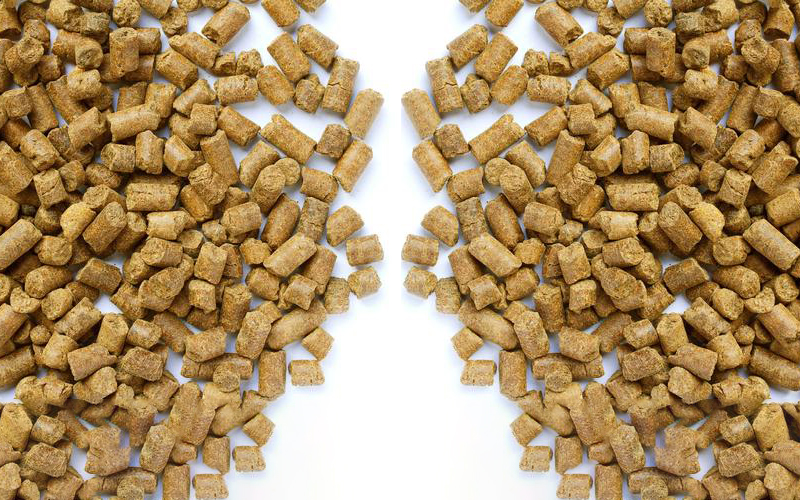
In modern animal husbandry, nutrition is the foundation of productivity. Whether raising poultry, cattle, sheep, pigs, fish, or small animals like rabbits, the quality and form of feed directly influence growth rate, health status, and overall farm profitability. Among all feeding methods, animal feed pellets have become the most widely adopted solution in commercial farming systems worldwide.
The shift from traditional loose feed or mash feed to pellet feed is not accidental. It is the result of decades of research in animal nutrition, feed processing technology, and livestock production efficiency. Today, feed pellets are considered a standard in modern agriculture because they deliver consistent nutrition, improve digestion, reduce waste, and enhance livestock growth performance.
This article explains in detail why animal feed pellets are important for livestock growth and how they contribute to modern farming success.
1. What Are Animal Feed Pellets?
Animal feed pellets are compact, cylindrical feed particles produced by compressing ground raw materials such as corn, soybean meal, wheat bran, grass, and mineral additives under heat and pressure.
The pelleting process transforms loose feed ingredients into uniform, dense pellets that are easier for animals to consume and digest.
Typical characteristics of feed pellets include:
- Uniform size and shape
- High density and durability
- Balanced nutrient composition
- Low dust content
- Improved palatability
These properties make pellets far more efficient than traditional feed forms.
2. Improved Nutrient Absorption and Growth Performance
One of the most important reasons feed pellets are widely used is their ability to improve nutrient absorption.
During pelleting:
- Heat and moisture break down complex starches
- Protein structures become easier to digest
- Fiber is partially softened
- Anti-nutritional factors are reduced
As a result, animals can absorb nutrients more efficiently, leading to:
- Faster weight gain
- Better feed conversion ratios
- Improved muscle development
- Higher milk, egg, or meat production
For livestock producers, this directly translates into increased profitability.
3. Reduced Feed Waste and Higher Feeding Efficiency
Traditional feed often leads to significant waste. Animals may:
- Select only preferred ingredients
- Scatter feed during eating
- Refuse coarse or unpalatable components
Feed pellets solve this problem because every pellet contains a uniform mixture of nutrients.
Benefits include:
- Minimal feed sorting by animals
- Reduced spillage and dust loss
- Controlled intake per feeding cycle
- More predictable feeding behavior
On large farms, even a 5–10% reduction in feed waste can significantly improve overall production efficiency.
4. Better Feed Hygiene and Animal Health
Feed safety is a critical factor in livestock production. Contaminated or poorly stored feed can lead to disease outbreaks and poor growth performance.
Pellet feed production involves a high-temperature conditioning process that helps:
- Kill harmful bacteria such as Salmonella and E. coli
- Reduce mold and fungal contamination
- Destroy parasites and pathogens
- Improve overall feed cleanliness
Healthier feed leads to:
- Lower mortality rates
- Reduced veterinary costs
- Stronger immune systems
- More stable herd performance
This is particularly important in intensive farming systems.
5. Enhanced Digestibility for Different Animal Species
Different animals have different digestive systems, and feed pellets can be customized to meet these needs.
For example:
- Poultry require high-energy, easily digestible pellets
- Cattle and sheep need high-fiber, roughage-rich pellets
- Fish require floating or sinking feed pellets
- Rabbits require fiber-balanced, fine pellets
In rabbit farming, pellet feed is especially important. A rabbit pellet maker is designed to produce small, uniform pellets with high fiber content and stable structure. These pellets support healthy digestion, prevent selective feeding, and help maintain proper dental wear in rabbits.
Without properly formed pellets, rabbits may experience digestive imbalance and uneven nutrient intake, which can negatively affect growth.
https://pelletisingmachine.com/rabbit-feed-pellet-making-machine
6. Consistent Nutrition in Every Bite
One of the biggest advantages of pellet feed is uniformity. Unlike loose feed mixtures, where ingredients may separate during handling, pellets ensure that every bite contains the same nutrient composition.
This consistency provides:
- Stable growth rates across livestock groups
- Predictable feed performance outcomes
- Easier formulation control for farmers
- Reduced risk of nutrient deficiency
For commercial farms, consistency is essential for planning production cycles and meeting market demand.
7. Improved Feed Conversion Ratio (FCR)
Feed conversion ratio is one of the most important indicators in livestock production. It measures how much feed is required to produce a unit of animal weight gain.
Feed pellets significantly improve FCR because:
- Animals waste less feed
- Nutrients are more digestible
- Feed intake is more controlled
- Energy loss during digestion is reduced
In many livestock systems, switching to pellet feed can improve FCR by 5–15%, depending on species and management conditions.
8. Easier Storage, Transport, and Handling
Feed pellets are much easier to handle compared to loose feed ingredients.
Advantages include:
- Higher bulk density reduces storage space requirements
- Lower transportation costs per ton
- Better resistance to moisture absorption
- Reduced risk of spoilage during storage
For large-scale farms and feed distributors, these logistical benefits significantly reduce operational costs.
9. Encouraging Better Feeding Behavior
Pellet feed improves animal feeding behavior in several ways:
- Animals consume feed more quickly and efficiently
- Feeding becomes more uniform across the herd or flock
- Reduced competition and feed aggression
- More predictable intake timing
This leads to better herd management and more stable growth patterns. (use this link)
10. Custom Nutrition for Different Growth Stages
Livestock nutritional needs change as they grow. Feed pellets can be formulated for different life stages:
- Starter feed pellets for young animals
- Grower feed pellets for rapid growth stages
- Finisher feed pellets for market weight preparation
- Breeding feed pellets for reproductive animals
This flexibility allows farmers to optimize nutrition at every stage of development, improving overall productivity.
11. Economic Benefits for Farmers
Although pellet feed production requires investment in machinery and processing systems, the long-term economic benefits are significant.
Farmers benefit from:
- Lower feed waste
- Improved growth rates
- Reduced disease-related losses
- Better feed utilization efficiency
- Higher market output per animal
Over time, these factors result in a strong return on investment.
Even small-scale producers using equipment like a rabbit pellet maker can achieve noticeable improvements in feed efficiency and animal performance.
12. Environmental Sustainability Advantages
Feed pellets also contribute to more sustainable farming practices.
Key environmental benefits include:
- Reduced agricultural waste through the use of by-products (straw, husks, bran)
- Improved feed efficiency reduces resource consumption
- Lower methane emissions due to better digestion in ruminants
- Reduced feed spoilage and landfill waste
This makes pellet feeding an important part of sustainable agricultural development.
13. Support for Intensive and Commercial Farming Systems
Modern livestock farming is increasingly intensive, requiring high efficiency and precise control. Feed pellets support this system by:
- Enabling automated feeding systems
- Supporting large-scale production consistency
- Reducing labor requirements
- Improving production predictability
Commercial farms rely heavily on pellet feed to maintain competitiveness in global markets.
14. Technological Advancements in Pellet Production
Modern feed pellet systems are becoming more advanced with features such as:
- Automated dosing and mixing systems
- Computer-controlled pellet mills
- Real-time monitoring of temperature and moisture
- Energy-efficient motors and drives
These innovations improve production efficiency and reduce operational costs while ensuring consistent feed quality.
15. Role of Pellet Feed in Global Food Security
As global population grows, demand for animal protein continues to rise. Feed pellets play a key role in meeting this demand by:
- Increasing livestock productivity
- Reducing feed resource waste
- Supporting efficient meat, milk, and egg production
- Enhancing global agricultural sustainability
Without efficient feed systems, meeting future food demand would be significantly more challenging.
Conclusion
Animal feed pellets are essential for livestock growth because they improve nutrition, reduce waste, enhance digestion, and increase overall production efficiency. From poultry and cattle to fish and rabbits, pellet feed provides a scientifically optimized feeding solution that supports modern agriculture.
The use of specialized equipment such as a rabbit pellet maker further demonstrates how feed technology can be adapted to meet the specific needs of different animals, ensuring healthier growth and more efficient farming systems.
In today’s competitive agricultural industry, adopting pellet feed is not just a choice—it is a necessity for achieving sustainable, profitable, and high-performance livestock production.