Harvest is a busy time. The combine rolls through, the grain trucks pull away, and the field is left with stubble and swath. For many farmers, that leftover straw is a nuisance. It has to be baled, moved, stored, or burned. In some regions, burning is banned because of air quality. In others, it’s still common, sending smoke across roads and neighboring farms. Either way, the straw is treated as a problem to be solved, not a resource to be used.
But straw is not a problem. It is simply a resource in an inconvenient form. It contains energy. It contains fiber. It can be burned for heat, used as bedding, or blended into feed. The reason it is so often wasted is not that it lacks value. The reason is that raw straw is bulky, difficult to handle, and expensive to transport. Those are physical problems, and physical problems have physical solutions.
That solution is densification. When straw is ground, conditioned, and compressed into pellets, it stops being a nuisance and starts being a product. The volume shrinks dramatically. The handling becomes simple. The market opens up. And the same material that was once burned in the field can be sold, used on the farm, or turned into a new source of income. A straw pelletizer is the piece of equipment that makes this transformation possible.
The Energy Hidden in the Stubble
Straw is made mostly of cellulose, hemicellulose, and lignin. These are the same structural components found in wood. They store energy from the sun, captured during the growing season. When straw burns, that energy is released as heat. On a dry basis, cereal straw typically contains around 14 to 17 megajoules per kilogram. That is not as high as coal, but it is comparable to many wood fuels. In a world where energy prices are volatile and renewable heat is in demand, that energy has value.
The challenge is not the energy content. The challenge is the form. Loose straw is light and fluffy. A ton of it takes up around eight cubic meters of space. It does not flow through augers or feeders. It bridges and clogs. It blows away in the wind. It absorbs moisture from the air. It is, in short, a difficult material to use efficiently.
Burning loose straw in a furnace is also inefficient. Much of the heat is lost because the straw burns too quickly and too unevenly. In many small boilers, loose straw produces more smoke than heat. That is why so much of it is simply burned in the open field, where the energy is wasted entirely.
What Changes When Straw Becomes Pellets
Pelleting solves the physical problems. The straw is first ground to a consistent particle size. It is then conditioned with steam, which softens the natural lignin and makes the fibers pliable. Finally, it is forced through a die under high pressure. The friction generates heat, the lignin melts, and the particles bind together into dense, uniform pellets.
The change is dramatic. A ton of straw pellets occupies about one cubic meter of space—roughly one-eighth the volume of loose straw. The pellets flow like grain. They can be stored in bins or silos. They can be transported in bulk trucks. They can be fed into automatic boilers and stoves. They burn cleanly and efficiently, with far less smoke than loose straw.
For farmers, this means options. Straw pellets can be used to heat farm buildings, greenhouses, or homes. They can be sold to pellet stove owners, biomass power plants, or industrial users. They can also be used as animal bedding, where their absorbency and low dust make them valuable. In some markets, they can even be included in ruminant feed as a fiber source.
The market value depends on the region and the application. Fuel pellets often sell for $100 to $250 per ton. Bedding pellets can command similar prices. Feed-grade pellets may sell for more. For a farm that produces hundreds of tons of straw each year, the potential revenue is significant.
Small Scale, Large Scale, and Everything in Between
Not every operation needs the same equipment. A small farm that wants to heat a workshop or a few barns might only need a few hundred tons of pellets per year. A commercial pellet plant might need thousands of tons. The equipment must match the scale.
For smaller operations, a compact pelletizer can be a practical starting point. These machines are affordable, run on standard electricity, and can be operated by one person. They are not designed for continuous industrial use, but they can produce enough pellets for on-farm heating or small-scale sales.
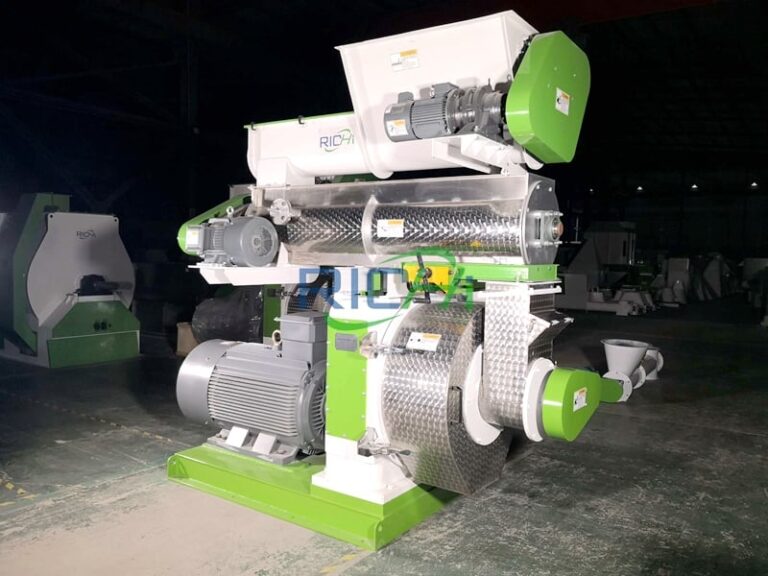
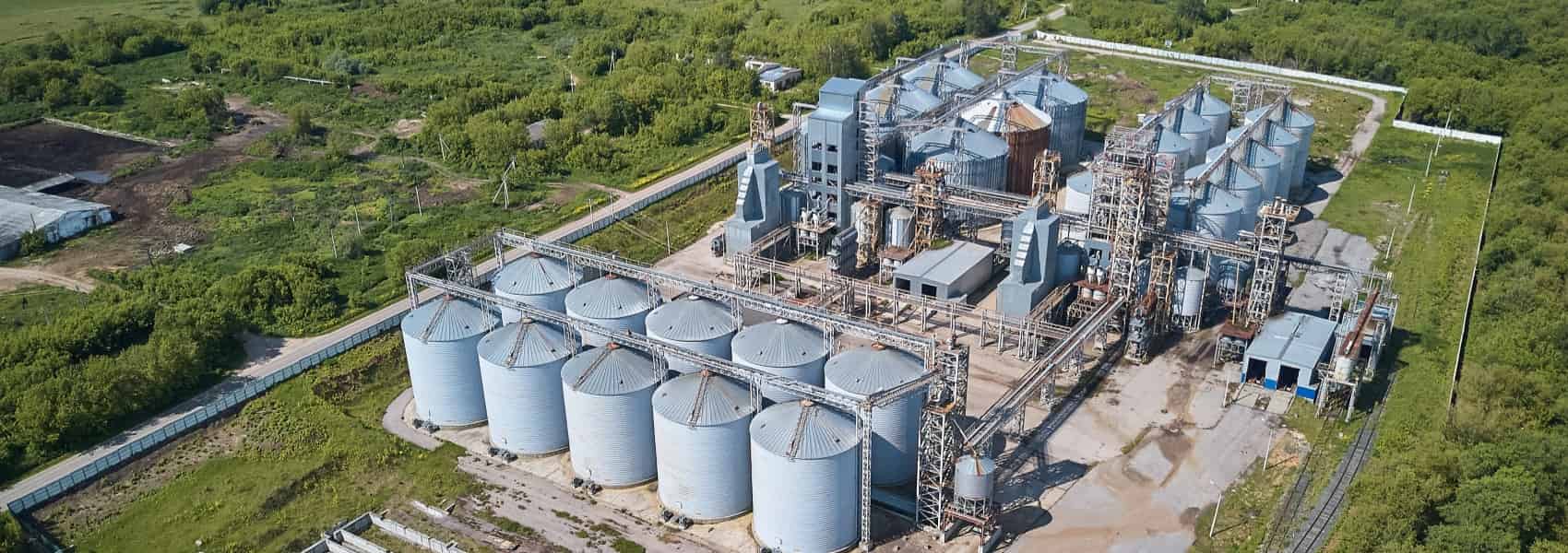
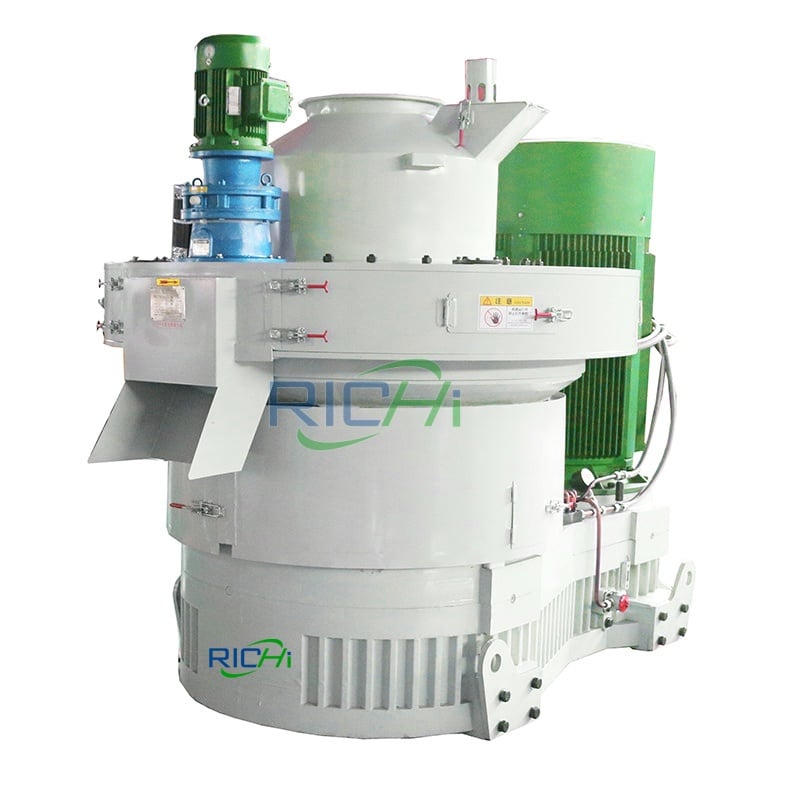
For larger operations, the requirements change. A large scale biomass pellet machine is built for continuous operation. It has a larger die, a more powerful motor, and heavier construction. It can process several tons per hour, day after day. These machines are used in commercial pellet plants, where reliability and throughput are essential. They are also used by large farms, cooperatives, and energy companies that need a steady supply of pellets.
The choice between small and large depends on the straw supply, the available capital, and the target market. A farm with 500 acres of wheat may produce enough straw to justify a mid-sized system. A cooperative or a dedicated pellet business may need an industrial line. The important thing is not to oversize or undersize. A machine that is too small will run constantly and wear out early. A machine that is too large will tie up capital and consume more power than necessary.
The Equipment Behind the Pellets
A complete straw pelleting system includes more than just the pelletizer. The straw must be ground, dried if necessary, conditioned, pelletized, cooled, and screened. Each stage affects the quality of the final product.
Grinding is usually done with a hammer mill. The goal is a uniform particle size, typically 3 to 5 millimeters. If the straw is too coarse, the pellets will be weak. If it is too fine, the pellets may be too dense and difficult to burn.
Drying is often necessary. Straw that has been stored outside may have a moisture content of 15% to 20%. For pelleting, the moisture should be around 12% to 15%. A rotary dryer or a belt dryer can reduce the moisture to the right level. In some cases, straw that is baled dry and stored under cover may not need additional drying.
Conditioning is the step where steam is added. This softens the fibers and activates the lignin. The temperature and moisture must be controlled carefully. Too little conditioning produces weak pellets. Too much makes the material sticky and difficult to press.
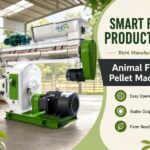
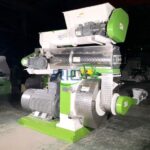
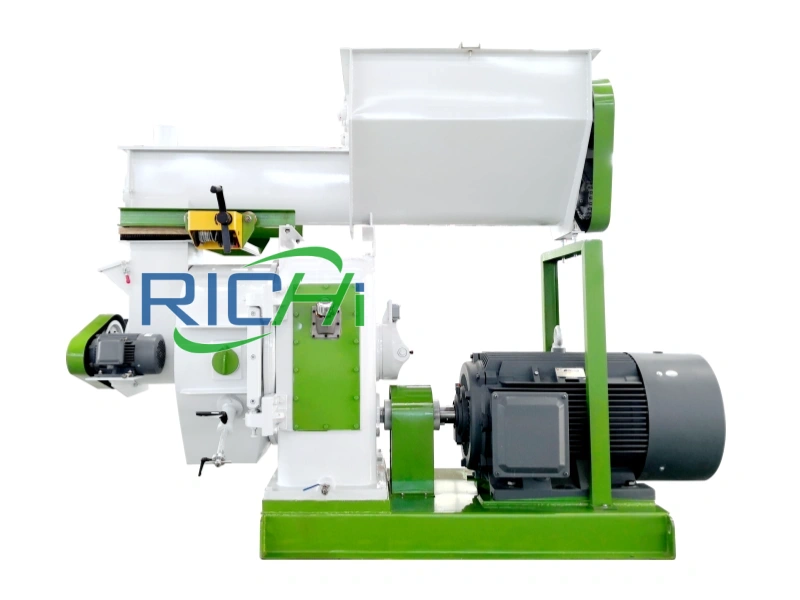
The pellet maker machine itself is the heart of the system. It consists of a die, rollers, a motor, and a control system. The die determines the pellet size and density. The rollers press the material through the die. The motor provides the power. The control system maintains consistent conditions.
After pelleting, the hot pellets must be cooled. A counterflow cooler or a simple belt cooler reduces the temperature and moisture content. Cooling hardens the pellets and prevents spoilage during storage. Finally, a screener removes fines and broken pellets, which are recycled back into the process.
The Economics: Does It Pay?
The economics of straw pelleting depend on several factors. The cost of the raw material is usually low. Straw is a byproduct of grain production. If it would otherwise be burned or hauled away, its opportunity cost is near zero. The main costs are energy, labor, maintenance, and the capital cost of the equipment.
Energy is the largest operating cost. Grinding, drying, and pelleting all consume electricity or fuel. A typical pellet line might use 100 to 200 kilowatt-hours per ton of pellets. At industrial electricity prices, that can add $10 to $30 per ton to the production cost. If drying is required, the energy cost can be higher.
Labor depends on the level of automation. A manual system might require two or three workers. An automated system might require one operator. Maintenance includes replacement of dies and rollers, lubrication, and general repairs. These costs are predictable and should be included in the business plan.
The revenue side depends on the market. In Europe, where biomass heating is well established, straw pellets are a recognized fuel. In North America, the market is growing but less mature. In Asia, demand for both fuel and bedding pellets is increasing. The key is to identify a reliable buyer before investing in equipment.
For many farms, the payback period is two to four years. After that, the system generates ongoing savings or income. The environmental benefits—reduced open burning, lower fossil fuel use, better waste management—are an additional advantage.
Beyond Fuel: Other Uses for Straw Pellets
Fuel is not the only market. Straw pellets are also used as animal bedding. They are highly absorbent, low in dust, and easy to handle. Horse owners, poultry farms, and dairy operations use them. In some regions, bedding pellets command a premium price because they are cleaner and more convenient than loose straw.
Straw pellets can also be used as a fiber source in animal feed. Ruminants can digest straw, though it is lower in energy than hay or silage. Pelleting improves digestibility slightly and makes the straw easier to mix into total mixed rations. This is particularly useful in dry regions where forage is scarce.
There is also a growing market for straw pellets in mushroom cultivation, soil remediation, and erosion control. These are niche applications, but they often pay well for consistent, high-quality pellets.
Mistakes to Avoid
Many first-time producers make the same mistakes. The most common is using straw that is too wet. Pelleting wet straw produces soft, crumbly pellets that fall apart in storage. Another mistake is using a die that is not suited to the material. Straw is abrasive and requires a wear-resistant die. A standard die will wear out quickly, driving up maintenance costs.
Another common problem is inconsistent grinding. If the particle size varies too much, the pellets will vary in density and durability. A good hammer mill with the right screen size is essential.
Finally, many producers underestimate the importance of cooling and screening. Hot pellets that are bagged immediately will sweat and mold. Pellets with too many fines will be rejected by buyers. Cooling and screening are not optional steps; they are part of producing a marketable product.
Where to Go From Here
If you are considering straw pelleting, start small. Test your straw. Find out its moisture content, its ash content, and its energy value. Talk to equipment suppliers. Ask for references from other farms or businesses using similar systems. Visit a working pellet plant if you can. See how the equipment operates, what maintenance is required, and what the final product looks like.
The technology is proven. The market is growing. The raw material is already on your farm. What is missing is the decision to treat straw as a resource instead of a waste. For more detailed information on equipment specifications, system design, and supplier comparisons, important link provides a useful starting point. The fields have already given you one harvest. With the right approach, they can give you a second one.