






Moisture Is a Process Variable, Not Just a Final Specification
When people evaluate sawdust cat litter, they often focus on visible characteristics such as shape, color, size and cleanliness.
Manufacturers, however, need to look deeper.
Moisture influences how the material behaves before forming, during compression, after drying and during packaging.
This makes moisture one of the most important process variables in biomass-based pet-litter manufacturing.
If the feed material changes significantly from day to day, the same machine settings may produce different results.
That is why professional production lines do not treat drying as an isolated step. Moisture management begins with raw-material storage and continues through forming, drying, cooling and packaging.
Where Does the Moisture Come From?
Sawdust moisture can vary for several reasons.
The source of the wood is one factor. Storage conditions are another.
Outdoor piles may absorb moisture from rain or humidity, while covered indoor storage can help maintain a more stable condition.
Freshly generated sawdust can also have different moisture characteristics from material that has been stored for several days.
Seasonal changes can become particularly noticeable in some regions.
For this reason, a production facility should regularly measure incoming raw material instead of assuming that the material specification never changes.
Why Too Much Moisture Causes Problems
Wet raw material may present several production challenges.
First, it can reduce forming stability.
Second, it increases the drying load.
Third, it may extend the time required to reach a stable final condition.
The result can be greater energy demand and reduced line efficiency.
This does not mean that material should be dried as much as possible before forming.
Over-drying can also be counterproductive.
The goal is to achieve a moisture condition that supports the intended forming process.
Why Excessively Dry Material Is Not Automatically Better
Very dry feedstock can behave differently during forming.
It may become more difficult to compact consistently and can produce greater quantities of fine material during handling.
A better production strategy is to identify a suitable operating window for the specific raw material and forming technology.
That operating window should be verified through practical testing rather than copied from another factory using a different wood source.
Choosing a Dryer for Real Operating Conditions
When reviewing an industrial wood chip dryer for sale, manufacturers should consider more than stated throughput.
The important questions include:
- What is the inlet moisture?
- What is the required outlet condition?
- What is the material bulk density?
- What type of heat source is available?
- How much floor space is available?
- How stable is the feed rate?
- How will exhaust air be handled?
- How will the dryer connect with the upstream and downstream equipment?
These questions determine whether a dryer is actually suitable for the project.
Drying and Forming Must Be Designed Together
A common mistake is to choose the forming equipment first and only later determine how much drying capacity is needed.
The better approach is to design these stages together.
Suppose a line produces a certain amount of formed litter every hour. The dryer must then be capable of handling that product flow while removing the required amount of moisture.
At the same time, the cooling stage needs to handle the dried product before screening and packaging.
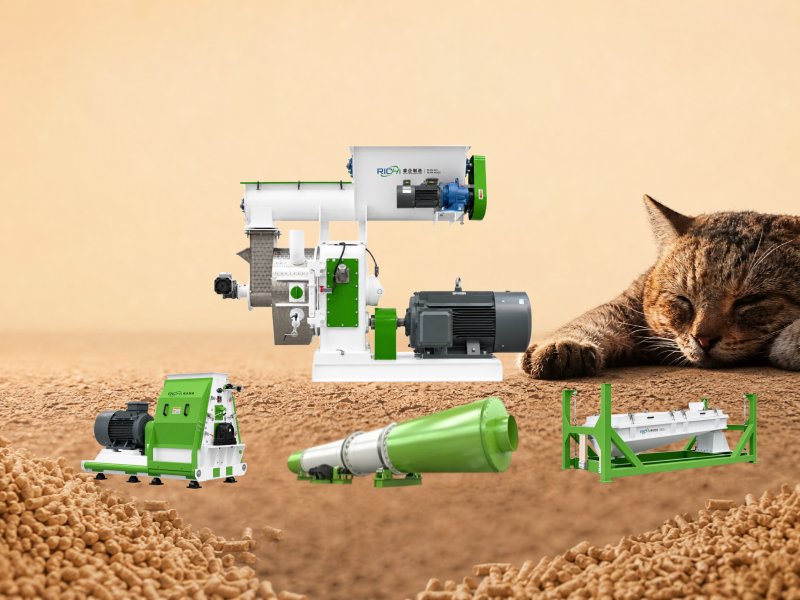
This is why a complete Sawdust Cat Litter Production Equipment is more useful than selecting machines independently.
Temperature Is Not the Only Drying Variable
Some manufacturers focus heavily on dryer temperature.
But drying performance depends on several interacting variables:
- Airflow
- Residence time
- Material thickness
- Particle density
- Surface moisture
- Inlet moisture
- Heat transfer
- Exhaust conditions
Increasing temperature does not necessarily solve every drying problem.
In some situations, improving airflow, feeding uniformity or material distribution can be more effective.
A stable drying process is therefore based on controlled conditions rather than maximum heat.
Cooling Deserves Equal Attention
After drying, the product still needs to transition to a stable packaging condition.
A cooling unit can help reduce product temperature before screening and bagging.
This improves the connection between thermal processing and final handling.
Cooling also contributes to stable storage conditions by reducing the risk of packaging material being exposed to excessively hot product.
A line that includes drying but pays little attention to cooling can still experience downstream instability.
Moisture and Dust Are Connected
Moisture also affects dust behavior.
Extremely dry material may create more loose fines during transport and handling, while insufficiently controlled forming can generate fragile particles.
This means dust performance should be evaluated at several points:
- After milling
- After forming
- During cooling
- During screening
- During packaging
The objective is to understand where the dust is generated and how much of it belongs in the finished product.
How Does Moisture Affect Product Strength?
For formed biomass products, moisture can influence particle cohesion.
If the material is not conditioned properly before forming, the finished particles may be less resistant to handling.
This can result in breakage during cooling, screening, conveying and packaging.
As a result, a manufacturer may observe acceptable particles immediately after forming but much more powder after the product reaches the packaging area.
That is often a process-control issue rather than a simple machine problem.
Quality Control Should Include Regular Sampling
A production line should have a routine quality-monitoring system.
Operators can sample material at different stages and record:
- Raw-material moisture
- Formed-product appearance
- Dried-product moisture
- Particle size
- Dust level
- Product temperature
Tracking these results over time allows the team to identify changes in raw material or machine performance.
For example, if finished moisture gradually rises, the cause may be increasing feed moisture rather than reduced dryer performance.
Without measurements, these problems are much harder to diagnose.
What Happens When Seasons Change?
Factories operating throughout the year should expect raw-material conditions to change.
A setting that works well during a dry season may not remain ideal during a wet season.
This does not mean the line must be redesigned every few months.
Instead, the operating parameters should be adjustable.
The control system should allow operators to adapt drying and feeding conditions according to actual raw-material properties.
That flexibility is especially useful for plants sourcing sawdust from multiple suppliers.
Where Does Forming Equipment Fit Into This?
The forming stage is the point where prepared material becomes the commercial product.
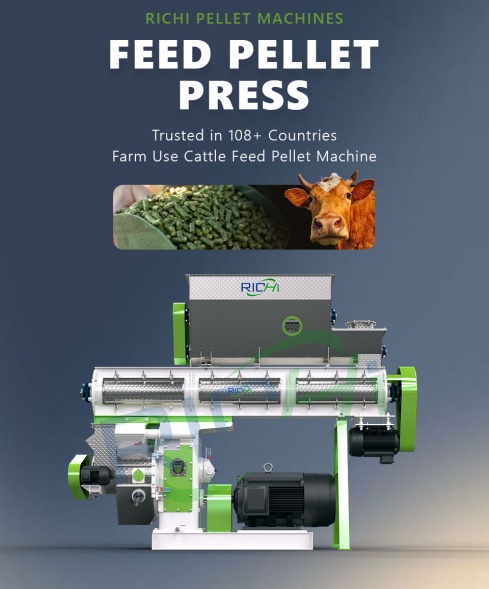
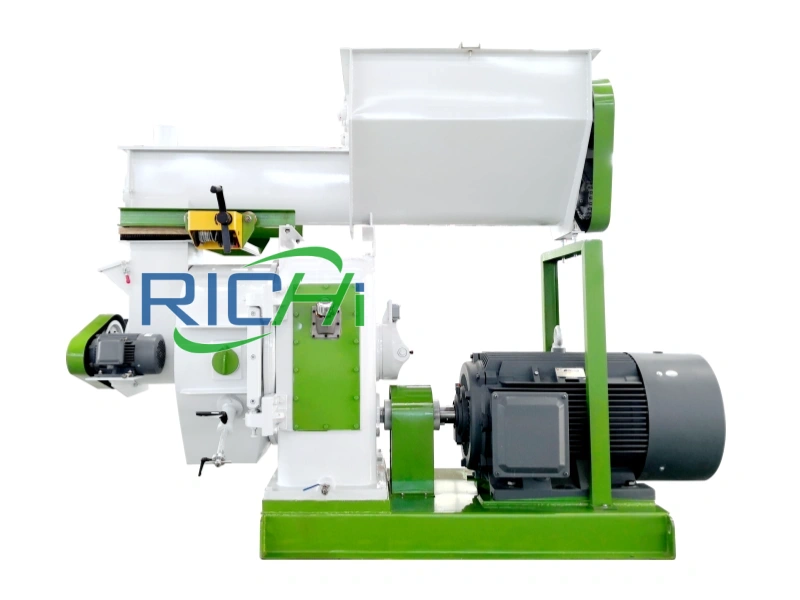
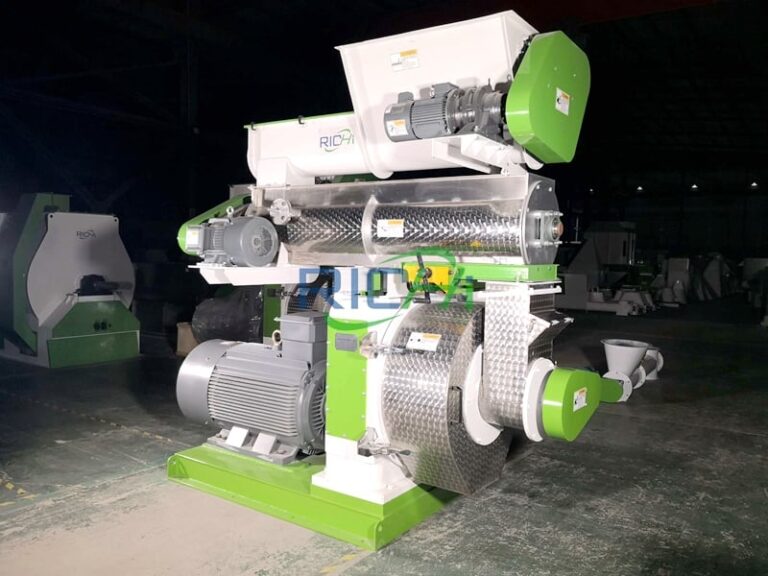
A properly selected pellet mill for sale should therefore be evaluated according to the material condition it will receive and the product characteristics it needs to create.
It should not be treated as an independent machine disconnected from moisture management.
The forming section, dryer and cooling system need to be balanced.
When these parts are properly coordinated, manufacturers have more control over final product consistency.
What Should Investors Ask Suppliers?
A useful technical discussion should include specific process questions.
Instead of asking only, “How much does the machine cost?”, manufacturers should ask:
What raw material was used in the design?
What inlet moisture is expected?
What final moisture is targeted?
How is the product cooled?
How are fines handled?
What happens when raw-material moisture changes?
What capacity can be achieved under actual operating conditions?
These questions can reveal whether the proposed equipment is genuinely matched to the project.
The Importance of a Repeatable Process
Quality should not depend entirely on the operator’s personal judgment.
The better production model is to create a repeatable process in which measurable conditions determine machine adjustments.
That may include:
- Moisture testing
- Controlled feeding
- Stable temperature management
- Automatic alarms
- Defined screening specifications
- Routine product inspection
The more standardized the process becomes, the easier it is to maintain the same quality across multiple production shifts.
For additional technical reading about process design and biomass utilization, helpful resources can complement equipment-focused research.
Conclusion
Moisture management affects almost every stage of sawdust cat litter production.
It influences forming behavior, drying demand, cooling requirements, dust generation, particle strength and packaging stability.
The most effective production systems therefore do not ask simply whether sawdust can be dried. They ask how moisture should be controlled from the moment the raw material enters the plant until the finished litter is packed.
That process-oriented approach creates a more reliable foundation for consistent product quality.