
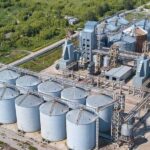
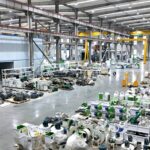
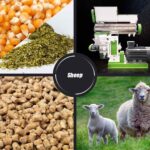


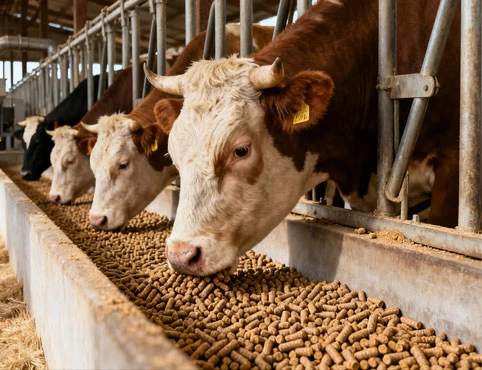
Cattle farms have different feeding requirements depending on herd size, cattle type, production goals, available raw materials, labor conditions, and local climate. A small family farm may need a simple feed preparation system, while a commercial dairy or beef operation may require a highly automated feed production line capable of processing several tons of feed per hour.
Modern cattle feed production technology provides flexible solutions for these different needs. Instead of using the same equipment and process for every farm, modern feed systems can be designed according to the actual characteristics of the cattle, raw materials, feed formulas, and production targets.
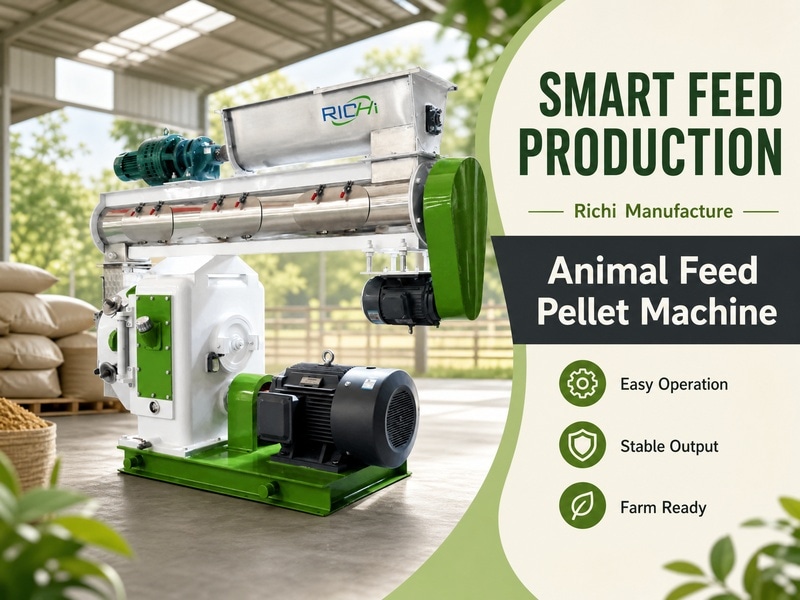
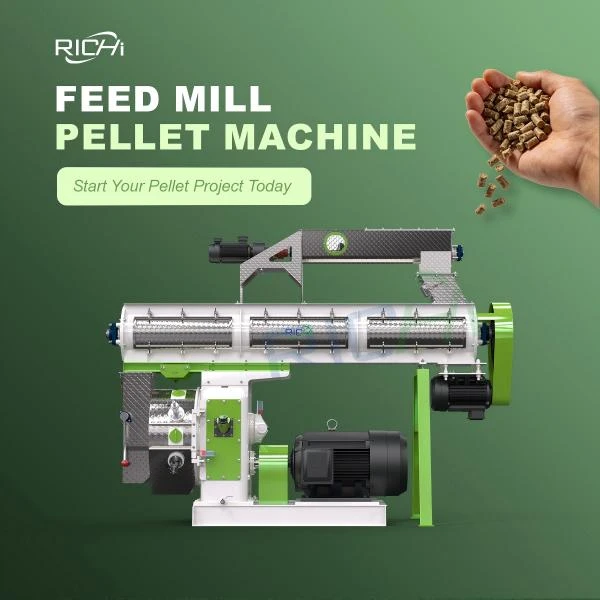
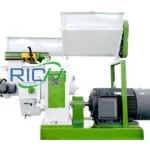
A complete cattle feed production system may include raw material cleaning, crushing, grinding, batching, mixing, conditioning, pelletizing, cooling, screening, conveying, and packaging. Among these machines, the cattle feed pellet machine is an important component when the farm requires compact and uniform feed pellets.
Pelletizing is only one part of modern feed technology, however. The real value of an efficient production system comes from coordinating all stages so that the final feed is consistent, easy to handle, suitable for the cattle, and economical to produce.
1. Why Farms Need Flexible Cattle Feed Technology
No two cattle farms operate under exactly the same conditions.
Farmers may use different combinations of:
- Corn
- Barley
- Wheat
- Wheat bran
- Rice bran
- Soybean meal
- Cottonseed meal
- Alfalfa
- Grass hay
- Straw
- Corn silage
- Molasses
- Minerals
- Vitamins
- Other agricultural by-products
The availability and price of these materials can vary significantly from one region to another.
Cattle also have different nutritional requirements depending on whether they are dairy cows, beef cattle, calves, breeding cattle, or growing animals.
Therefore, modern cattle feed production technology needs to be flexible enough to accommodate different formulas and raw materials.
2. Technology for Small Cattle Farms
Small farms often have different priorities from large commercial feed manufacturers.
A small farm may not need a fully automated production plant. Instead, it may require a compact system that can process locally available materials while reducing manual labor.
A basic feed processing system may include:
- Crusher or grinder
- Mixer
- Small batching system
- Cattle feed pellet machine
- Cooler
- Simple screening system
The exact configuration depends on the feed formula and production capacity.
For farms producing feed for their own cattle, a smaller system can allow farmers to process their own grain and forage rather than purchasing all finished feed from external suppliers.
This can provide greater control over raw materials and feeding formulas.
3. Technology for Large Commercial Farms
Large cattle farms require greater production capacity and process stability.
A commercial dairy or beef operation may need several tons of feed per hour.
In such cases, the production line can include:
- Raw material receiving system
- Cleaning equipment
- Storage silos
- Automatic batching
- Hammer mill
- Mixer
- Steam conditioner
- Multiple pellet mills
- Pellet cooler
- Vibrating screen
- Conveyors
- Automatic packing system
- Centralized control system
The equipment is designed to work continuously and reduce production bottlenecks.
Automation is particularly valuable for large farms because it can reduce repetitive manual operations and improve consistency between batches.
4. Meeting the Needs of Dairy Farms
Dairy cows have specific nutritional requirements related to milk production.
A dairy feed formula may contain energy sources, protein sources, forage, minerals, vitamins, and other ingredients.
Common ingredients can include:
- Corn
- Barley
- Soybean meal
- Wheat bran
- Alfalfa
- Grass
- Mineral premixes
- Molasses
The formula must be adjusted according to the farm’s feeding strategy.
Modern production technology allows different ingredients to be accurately weighed and mixed according to programmed formulas.
If the feed is pelletized, the cattle feed pellet machine can produce a uniform product that is easier to handle and distribute.
For commercial dairy farms, consistent feed quality can also simplify daily feed management.
5. Meeting the Needs of Beef Cattle Farms
Beef cattle production may involve calves, growing cattle, finishing cattle, and breeding animals.
Each group can have different nutritional requirements.
Modern feed production systems can produce different formulas for different stages.
For example:
- Calf starter feed
- Growing cattle feed
- Finishing feed
- Breeding cattle feed
The formulas may vary in protein, energy, fiber, minerals, and pellet size.
A flexible production line allows farms to switch between formulas while maintaining controlled batching and mixing.
This is particularly useful for farms that raise cattle through several growth stages.
6. Supporting Calf Feed Production
Young calves require specially formulated feed.
Calf feed may use smaller particles or smaller pellets than feed intended for mature cattle.
A feed production line can incorporate a crumbler after pelletizing when smaller feed particles are required.
The production process may include:
Grinding → Batching → Mixing → Conditioning → Pelletizing → Cooling → Crumbling → Screening
The final particle size can be adjusted according to the intended feeding stage.
This flexibility allows one production line to manufacture different types of cattle feed.
7. Handling High-Fiber Raw Materials
Many farms have access to forage and agricultural residues.
Examples include:
- Alfalfa hay
- Grass hay
- Straw
- Corn stalks
- Other forage materials
These materials can contain substantial amounts of fiber and may require additional preparation.
A high-fiber feed production line may use:
- Bale breaker
- Forage cutter
- Crusher
- Hammer mill
- Screening equipment
- Mixer
- Conditioner
- Pellet machine
- Cooler
Long or bulky fibers need to be reduced to a suitable particle size before mixing and pelletizing.
The processing technology should be adapted to the characteristics of the raw materials rather than using a standard configuration for every farm.
8. Producing Pelleted Cattle Feed
Pelletizing is one of the most widely used technologies for producing compact livestock feed.
The prepared feed mixture enters the pellet machine, where it is compressed through a die.
The resulting pellets can have a relatively uniform:
- Diameter
- Length
- Density
- Shape
A cattle feed pellet machine can be configured with different die specifications according to the desired pellet diameter.
Pellet size may vary according to cattle age, feed type, handling requirements, and customer specifications.
The machine should also be selected according to the formula because high-fiber feeds can behave differently from high-concentrate feeds during compression.
9. Supporting TMR-Based Feeding Systems
Total Mixed Ration, or TMR, is widely used in cattle feeding.
A TMR combines forage, grains, protein sources, minerals, and other ingredients into a balanced ration.
Traditional TMR is normally prepared as a loose mixed ration and distributed directly to cattle.
However, some commercial feed operations may process TMR-type formulas into pellets.
A pelleted TMR-style feed may require:
- Forage preparation
- Ingredient grinding
- Accurate batching
- Mixing
- Moisture adjustment
- Conditioning
- Pelletizing
- Cooling
- Screening
The appropriate process depends on the formula and intended application.
Modern technology allows the processing system to be adapted to the physical characteristics of the ration.
10. Accurate Batching Meets Farm Formula Requirements
Feed formulas can change according to cattle type, season, ingredient availability, and production objectives.
Accurate batching allows farms to maintain better control over these changes.
An automatic batching system can weigh ingredients according to a programmed recipe.
This reduces the risk of manually adding incorrect quantities.
For example, a formula may require different proportions of corn, soybean meal, bran, alfalfa, minerals, and additives.
The batching system can manage these ingredients individually before sending them to the mixer.
This supports more consistent feed production.
11. Better Mixing Improves Feed Uniformity
Once ingredients have been weighed, they must be mixed thoroughly.
A mixer should distribute different ingredients throughout the batch.
This is particularly important for low-inclusion ingredients such as:
- Vitamins
- Minerals
- Premixes
- Salt
- Additives
If these ingredients are poorly distributed, individual portions of feed may not have the intended composition.
Modern mixers are designed to provide more uniform mixing within a controlled period.
Some systems can also add liquids such as molasses or oil during mixing.
12. Handling Molasses and Other Liquid Ingredients
Molasses is commonly used in certain cattle feed formulas.
It can provide energy and improve the physical characteristics of some feed mixtures.
However, liquid ingredients can affect material flow and pelletizing performance.
Modern liquid addition systems can use:
- Storage tanks
- Pumps
- Flow meters
- Spray nozzles
- Automated valves
These components help distribute liquid ingredients more evenly.
The amount of liquid added should be controlled according to the feed formula and processing requirements.
13. Steam Conditioning for Better Pellet Production
Steam conditioning is another important technology in modern cattle feed production.
Before entering the pellet machine, the feed mixture can be exposed to controlled steam.
This increases moisture and temperature and prepares the material for compression.
Proper conditioning can help improve:
- Pellet formation
- Material flow
- Pellet durability
- Production stability
- Pellet mill performance
The exact settings depend on the formula.
For example, a high-fiber formula may require different conditioning parameters from a grain-based concentrate.
14. Choosing the Right Cattle Feed Pellet Machine
The pellet machine should be selected according to the actual farm requirements.
Important factors include:
Production Capacity
The machine should match the required hourly output.
Pellet Diameter
The die should be suitable for the required pellet size.
Raw Materials
The machine must be capable of processing the intended ingredients.
Fiber Content
High-fiber formulas may require stronger compression and appropriate die selection.
Moisture
Feed moisture affects material flow and pellet formation.
Automation
The required level of automation depends on farm size and labor availability.
Operating Hours
A farm producing feed for many hours per day needs a machine designed for continuous operation.
Choosing a machine according to these factors can help avoid capacity limitations and unnecessary investment.
(https://richipelletizer.com/cattle-feed-pellet-mill-for-sale/
15. How Technology Supports Different Pellet Sizes
Different cattle may require different feed particle sizes.
For example, calves may need smaller feed particles, while mature cattle can consume larger pellets.
Modern production lines can use different dies or additional crushing equipment to produce different product sizes.
A production line may therefore be configured to manufacture several feed products using the same basic processing system.
This flexibility is valuable for farms that manage multiple cattle groups.
16. Cooling Technology Protects Feed Quality
Fresh pellets are hot after leaving the pellet machine.
They need to be cooled before storage.
A pellet cooler removes heat and excess moisture through controlled airflow.
Efficient cooling helps reduce the risk of:
- Mold
- Condensation
- Feed deterioration
- Pellet breakage
- Storage losses
For larger farms, the cooler should be matched to the capacity of the pellet machine.
Otherwise, cooling can become a bottleneck.
17. Screening Improves Final Feed Quality
After cooling, pellets may contain some fines or broken particles.
A vibrating screen can separate these materials from the finished pellets.
The final product can then be sent to storage or packaging.
Depending on the process design, suitable fines can be returned to the production system.
This reduces waste and improves overall material utilization.
18. Automation Reduces Farm Labor Requirements
Labor availability can be a major concern for modern livestock farms.
Automatic systems can reduce manual operations during:
- Batching
- Mixing
- Conveying
- Pelletizing
- Cooling
- Screening
- Packaging
A centralized control system allows operators to monitor several machines from a single interface.
This is especially useful for large farms where feed production is carried out regularly.
Automation also helps reduce manual errors and improves process repeatability.
19. Technology for Farms Using Local Raw Materials
Many cattle farms have access to local agricultural products.
For example, a farm may have:
- Corn
- Wheat
- Barley
- Straw
- Hay
- Alfalfa
- Rice bran
- Oilseed meals
Modern feed processing equipment allows these materials to be processed into suitable feed products.
Instead of relying entirely on purchased finished feed, farmers can develop formulas based on available materials.
However, local ingredients should be tested and evaluated before being included in a commercial feed formula.
Factors such as moisture, nutritional composition, contamination, storage stability, and fiber level should be considered.
20. Reducing Feed Waste on the Farm
Feed waste can increase the effective cost of livestock production.
Modern processing technology can reduce certain forms of waste through:
- Accurate batching
- Uniform mixing
- Proper pelletizing
- Effective cooling
- Screening
- Better storage
- Controlled packaging
Pellets can also be easier to handle mechanically than loose feed.
When pellets maintain appropriate durability, they can withstand conveying and transportation with fewer broken particles.
21. Improving Feed Storage
Storage conditions are important after production.
Feed should be protected from:
- Moisture
- Rain
- Condensation
- Excessive heat
- Pests
- Contamination
Modern feed plants may use silos, bins, warehouses, and controlled conveying systems.
Cooling before storage is particularly important for pelleted feed.
Proper storage helps maintain feed quality and reduces inventory losses.
22. Meeting Seasonal Farm Needs
Farm feeding requirements can change throughout the year.
Forage availability may change with the seasons.
Some farms may have abundant grass or hay during one period and rely more heavily on stored feed during another.
A flexible feed production system allows the formula to be adjusted according to seasonal raw material availability.
For example, an operator may change the proportion of forage, grains, or protein ingredients while keeping the basic processing system.
This flexibility can help farms make better use of available resources.
23. Supporting Feed Production for Different Farm Sizes
Modern technology can be scaled according to farm requirements.
Small Farms
A compact semi-automatic system may be sufficient.
Medium Farms
A medium-capacity line can include automatic batching and more advanced conveying.
Large Farms
Large operations may use fully integrated production lines with centralized control.
The important principle is to avoid purchasing equipment that is significantly larger or more complex than the farm actually needs.
At the same time, future expansion should be considered during the initial design.
24. Improving Energy Efficiency
Energy is another operating cost that modern feed technology needs to address.
Energy-efficient equipment can include:
- Efficient hammer mills
- Variable-frequency drives
- Optimized pellet mills
- Efficient fans
- Automatic conveyors
- Properly designed cooling systems
The production line should also minimize unnecessary material movement.
An efficient factory layout can reduce the distance that raw materials and finished feed need to travel.
25. Preventive Maintenance Supports Farm Reliability
Feed production equipment must operate reliably because livestock require feed every day.
Unexpected equipment failure can interrupt the farm’s feeding program.
Preventive maintenance should include:
- Checking bearings
- Inspecting dies
- Inspecting rollers
- Lubricating moving components
- Replacing worn screens
- Checking belts
- Inspecting motors
- Cleaning equipment
- Checking electrical components
For the cattle feed pellet machine, regular inspection of the die and roller system is particularly important.
Preventive maintenance can help reduce unexpected downtime and extend equipment service life.
26. Safety Features for Farm Feed Production
Safety is an important part of modern equipment design.
Feed processing machinery may contain high-speed rotating components, heavy motors, electrical systems, and compressed materials.
Equipment can therefore incorporate:
- Safety guards
- Emergency stop buttons
- Overload protection
- Electrical protection
- Interlocking systems
- Mechanical safety devices
Operators should also receive appropriate training before operating the machinery.
27. Digital Monitoring for Better Farm Management
Modern feed production systems can collect operational information.
Farm managers may monitor:
- Production volume
- Raw material consumption
- Electricity use
- Equipment operating time
- Batch records
- Maintenance information
- Production alarms
This data can help identify production problems and improve management decisions.
For example, unusual energy consumption may indicate that a grinder or pellet machine requires inspection.
28. Customized Production Lines for Different Farms
A standardized equipment package cannot always meet every farm’s requirements.
Customization may be necessary when farms have:
- Unusual raw materials
- High-fiber formulas
- Multiple feed products
- Limited factory space
- Special pellet sizes
- Specific automation requirements
- Different production capacities
A customized production line can be designed around the actual production process.
This may involve changing equipment capacity, machine arrangement, conveying methods, storage systems, or control architecture.
29. How RICHI Supports Farm-Specific Feed Solutions
RICHI Pelletizer can design cattle feed production lines according to the customer’s raw materials, feed formulas, target capacity, pellet specifications, factory conditions, and automation requirements.
A typical system can include:
Raw Material Cleaning → Grinding → Batching → Mixing → Conditioning → Cattle Feed Pellet Machine → Cooling → Screening → Packaging
Additional equipment can be added for high-fiber forage, TMR-based formulas, liquid ingredients, or specific feed products.
The objective is to provide a complete processing solution rather than simply supplying one machine.
30. What Farmers Should Prepare Before Buying Equipment
Before selecting cattle feed production equipment, farmers should prepare several important details.
1. Feed Formula
List the major ingredients and their approximate proportions.
2. Raw Materials
Provide information about moisture, fiber, particle size, and physical characteristics.
3. Production Capacity
Determine how many tons of feed are required per hour or per day.
4. Pellet Size
Define the required pellet diameter.
5. Cattle Type
Identify whether the feed is intended for dairy cows, beef cattle, calves, breeding cattle, or growing animals.
6. Factory Conditions
Provide available floor space, building height, electricity, and other infrastructure information.
7. Automation Requirements
Decide how much manual operation is acceptable.
8. Future Expansion
Consider whether production capacity may increase later.
Providing this information allows the equipment configuration to be designed more accurately.
31. How Modern Technology Improves Farm Flexibility
One of the greatest benefits of modern cattle feed production technology is flexibility.
A farm does not necessarily need to use the same feed formula throughout the year.
Modern equipment can support multiple formulas and production processes.
For example, the same production line may manufacture:
- Dairy cattle pellets
- Beef cattle pellets
- Calf feed
- High-fiber feed
- Concentrate feed
- TMR-based pellets
Different dies, formulas, or processing settings can be used according to the final product.
This flexibility helps farms respond to changes in cattle requirements and raw material availability.
32. The Relationship Between Feed Technology and Farm Economics
The purpose of modern feed technology is not simply to make more sophisticated equipment available.
The technology should solve practical farm problems.
A properly designed system can help farmers:
- Reduce manual labor
- Improve feed consistency
- Process local raw materials
- Reduce material losses
- Improve storage
- Produce different feed types
- Control production capacity
- Improve equipment utilization
- Reduce unexpected downtime
The economic value comes from combining these improvements into one coordinated system.
Conclusion
Modern cattle feed production technology can be adapted to meet the needs of farms ranging from small family operations to large commercial dairy and beef facilities.
Different farms may use different raw materials, feed formulas, production capacities, cattle categories, and feeding strategies. For this reason, feed processing equipment should be selected according to actual farm requirements rather than using a one-size-fits-all configuration.
Grinding equipment prepares raw materials, batching systems provide formula accuracy, mixers create uniform feed mixtures, and conditioners prepare the material for pelletizing. A properly selected cattle feed pellet machine then converts the prepared feed into compact and uniform pellets. Cooling and screening equipment stabilize the finished product, while conveyors, packaging machines, and automated control systems improve overall production efficiency.
Modern technology can also support high-fiber forage, concentrate feed, TMR-based formulas, calf feed, dairy feed, and beef cattle feed. Automation, digital monitoring, preventive maintenance, and customized process design further improve the reliability and flexibility of farm feed production.
For farmers planning a new feed production system, the most important step is to start with the actual farm requirements: cattle type, feed formula, raw materials, target capacity, pellet size, available space, and future expansion plans. These factors can then be used to design an equipment configuration that supports efficient, consistent, and practical cattle feed production.