



How Is Quality Premix Feed Produced Efficiently?
Producing balanced animal feed is not simply a matter of mixing several raw materials together. Modern livestock and poultry production requires carefully controlled nutrition, accurate ingredient dosing, consistent mixing, and reliable quality management. This is especially true when producing premixes, where vitamins, minerals, amino acids, additives, and other micro-ingredients need to be incorporated into a carrier material at relatively low inclusion rates.
For feed manufacturers, understanding how a premix is made can help with everything from raw-material selection to equipment planning. It can also make it easier to determine whether a small blending system is sufficient or whether a complete industrial production setup is more appropriate.
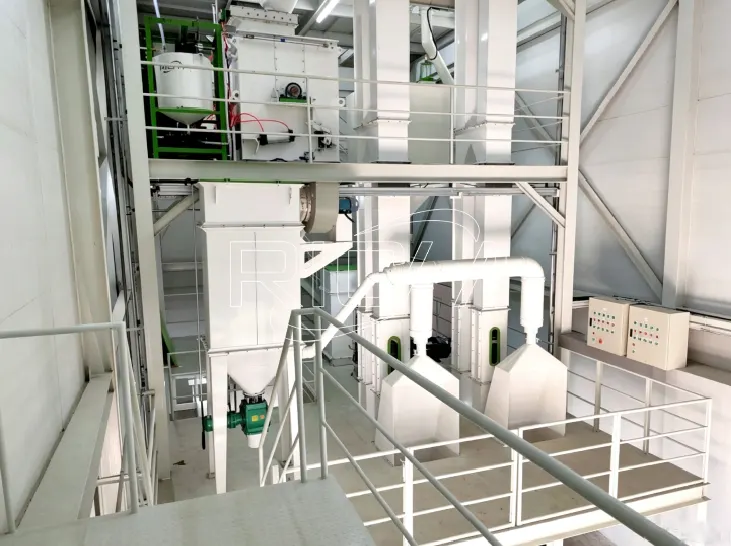
A well-designed premix feed mill therefore involves more than a mixer. It is a coordinated system in which receiving, storage, dosing, grinding when necessary, mixing, conveying, packaging, and quality control work together.
This article explains the basic production process, common equipment choices, formulation considerations, and practical factors that should be evaluated before building a premix production facility.
What Exactly Is a Feed Premix?
A feed premix is a concentrated blend of nutritional and functional ingredients that is later added to complete animal feed. Depending on the target animal and formulation, a premix may contain vitamins, trace minerals, amino acids, enzymes, antioxidants, minerals, or other feed additives.
Because many of these ingredients are used in small quantities, achieving uniform distribution is particularly important. If a micro-ingredient is not properly dispersed, the final feed may not contain the intended concentration throughout the batch.
Premixes are commonly formulated for poultry, pigs, cattle, aquaculture species, and other livestock. Different species have different nutritional requirements, so there is no universal formula that can be applied to every application.
For example, a broiler premix may be designed around rapid growth and feed efficiency, while a layer premix may focus more heavily on mineral nutrition associated with egg production. Cattle formulations can also vary considerably according to whether the feed is intended for calves, dairy cattle, beef cattle, or other categories.
Which Raw Materials Are Commonly Used?
The raw materials used in premix production depend on the formulation and the target animal.
Typical components can include:
- Vitamin preparations
- Trace minerals
- Calcium and phosphorus sources
- Amino acids
- Enzymes
- Antioxidants
- Organic acids
- Functional feed additives
- Carrier materials
Carrier materials are particularly important because they help distribute micro-ingredients evenly throughout the mixture. Common carriers can include rice bran, wheat bran, corn flour, soybean meal fractions, or other suitable feed-grade materials, depending on the formulation.
Particle size, density, moisture content, and flowability should all be considered when selecting a carrier. Ingredients with very different physical properties can separate during handling, which may reduce the uniformity of the final product.
For this reason, formulation is not purely a nutritional question. Physical characteristics of the ingredients also influence how the production process should be designed.
How Does a Premix Production Process Work?
Although individual factories may use different configurations, a typical process can be divided into several stages.
1. Raw Material Receiving
The process starts when ingredients arrive at the facility. Materials should be checked for identity, quality, moisture, packaging condition, and other relevant specifications before entering storage.
Bulk ingredients and micro-ingredients may require different storage methods. Large-volume materials can be stored in silos or larger bins, while small-quantity additives are often kept in dedicated bags, containers, or dosing stations.
Good storage management is important because premix ingredients can be sensitive to humidity, heat, light, and contamination.
2. Cleaning and Preparation
Raw materials may pass through cleaning equipment before further processing. The purpose is to remove unwanted foreign materials and protect downstream equipment.
Not every premix requires intensive grinding. However, if a carrier or other component has particles that are too large or inconsistent, a hammer mill or other grinding system may be incorporated into the production process.
The required degree of size reduction depends on the formulation and the physical properties of the raw materials.
3. Accurate Dosing of Micro-Ingredients
Dosing is one of the most critical steps in premix production.
Some ingredients may account for only a small fraction of the total batch, meaning that conventional bulk weighing equipment may not provide sufficient precision. Separate micro-dosing systems can therefore be used for low-inclusion ingredients.
The dosing system should be selected according to the required accuracy, batch size, ingredient characteristics, and expected production capacity.
For smaller facilities, manual weighing combined with controlled feeding procedures may sometimes be practical. As production volume increases, automated dosing can improve consistency and reduce operator workload.
Why Is Mixing Uniformity So Important?
The purpose of mixing is to distribute every ingredient throughout the batch as evenly as possible.
A high-quality mixer should provide consistent blending without causing excessive segregation, ingredient damage, or unnecessary processing time. Different mixer designs can be used depending on the characteristics of the material.
Ribbon mixers, paddle mixers, and other industrial mixing systems are common options. The best choice depends on factors such as batch volume, mixing time, bulk density, particle size, and formulation.
Mixing performance should not be judged simply by how quickly a machine operates. A shorter cycle is not automatically better if the resulting product is insufficiently uniform.
In practice, manufacturers should consider mixer filling level, sequence of ingredient addition, mixing time, particle characteristics, and discharge behavior together.
Should Ingredients Be Added in a Specific Order?
Yes. Ingredient addition order can influence the quality of the final blend.
Larger-volume carrier materials are often introduced before or together with certain micro-ingredients, while some highly concentrated components may require pre-dilution or staged addition.
For very low-dose ingredients, a pre-blending process can be useful. In this approach, the micro-ingredient is first mixed with a portion of carrier material before being introduced into the main mixer. This helps improve distribution and reduces the risk of localized concentration.
The exact sequence should be established according to the formulation and the characteristics of the materials being handled.
How Large Should a Premix Production Facility Be?
There is no single production capacity that fits every business.
A small feed manufacturer may need only a compact system for several hundred kilograms per batch, while a specialized premix producer serving multiple feed mills may require a much larger automated facility.
Capacity planning should take into account:
- Expected daily output
- Number of production shifts
- Batch size
- Number of formulations
- Packaging requirements
- Storage capacity
- Future production expansion
- Degree of automation
It is generally better to calculate capacity from actual production requirements rather than selecting equipment based solely on the advertised hourly output of a mixer.
A system that is significantly oversized can increase investment and operating costs, while an undersized system may create bottlenecks when demand increases.
What Equipment Is Needed?
A complete production setup may include several categories of equipment.
A basic configuration can contain:
- Raw material receiving equipment
- Storage bins or silos
- Cleaning equipment
- Grinding equipment where required
- Micro-ingredient dosing systems
- Weighing systems
- Premixing equipment
- Main mixer
- Conveying equipment
- Screening equipment
- Finished-product bins
- Packing equipment
- Dust collection systems
- Electrical and control systems
Not every facility needs every piece of equipment. For example, a formulation based primarily on fine, ready-to-use ingredients may require less grinding than a system processing coarse agricultural materials.
This is why equipment selection should begin with the formulation and production process rather than starting with a machine catalog.
Related Post: https://commercialpelletmill.com/livestock-feed-production-line/
How Does Automation Affect Production?
Automation can improve repeatability by reducing manual intervention during weighing, dosing, mixing, and material transfer.
In a modern system, a central control system can manage production recipes and coordinate different pieces of equipment. Operators can monitor ingredient quantities, batch sequences, equipment status, and production records from a control interface.
Automation can also help reduce certain human errors, particularly when many micro-ingredients are involved.
However, automation does not eliminate the need for good production management. Sensors need calibration, weighing equipment requires maintenance, and recipes still need to be reviewed and controlled by qualified personnel.
For smaller factories, partial automation can sometimes provide a practical compromise between manual production and a fully automated plant.
What About Dust Control?
Dust management is another important consideration in premix manufacturing.
Many powdered feed ingredients can generate fine particles during unloading, conveying, weighing, mixing, and packing. Without appropriate dust collection, these particles can accumulate around equipment and affect the working environment.
A properly designed dust collection system can help capture airborne particles at key emission points. Enclosed conveyors, sealed transfer points, local extraction, and appropriate filtration can all contribute to better housekeeping.
Dust control should be considered during the initial plant layout rather than added as an afterthought.
How Much Does a Poultry Feed Production Plant Cost?
The investment required for a poultry feed facility can vary considerably because the scope of a project may range from a small mixing and packing system to a complete automated feed mill.
When researching poultry feed mill plant price for broiler feed, it is important to distinguish between the cost of individual machines and the total project investment.
A complete project may include civil construction, raw-material storage, feed processing equipment, electrical systems, automation, dust collection, installation, transportation, and commissioning.
Capacity also has a major influence on investment. A small farm-level facility and a commercial industrial plant cannot be compared simply by looking at the price of the pellet mill or mixer.
Other factors include the number of raw materials, required automation level, packaging method, building design, local labor costs, and installation conditions.
Therefore, a useful quotation should be based on a clearly defined production process and capacity rather than a machine name alone.
How Can Premix Quality Be Maintained?
Quality management should cover the entire production cycle.
Incoming raw materials should be checked according to appropriate specifications. Storage areas should remain clean and dry, and materials should be identified clearly to prevent mix-ups.
During production, weighing accuracy and mixing performance should be monitored. Finished batches can also be tested according to the manufacturer’s quality-control procedures and applicable regulatory requirements.
Traceability is particularly valuable. Production records should make it possible to identify which raw materials and batch records were associated with a finished product.
Regular equipment inspection is equally important. Worn mixer components, inaccurate load cells, blocked dosing systems, or leaking conveyors can all affect production consistency.
What Is the Role of Packaging?
After mixing, the finished premix may be packed into bags or other suitable containers.
Packaging specifications depend on the product and market. Smaller packages may be suitable for specialty premixes, while larger bags can be more efficient for industrial customers.
Automatic weighing and bagging systems can improve packaging consistency and reduce manual labor. For facilities with relatively low output, semi-automatic packing may provide sufficient efficiency without unnecessary complexity.
Packaging should also protect the premix from moisture and contamination during transportation and storage.
How Should a New Factory Be Planned?
Before purchasing equipment, it is useful to prepare a basic process design.
The planning stage should answer several questions:
- What animals will the premixes be designed for?
- What formulations will be produced?
- What is the expected daily output?
- How many batches will be produced each day?
- Which ingredients require micro-dosing?
- Is grinding necessary?
- What packaging sizes are required?
- How much raw-material storage is needed?
- What level of automation is appropriate?
- Is future expansion expected?
The answers to these questions provide the foundation for equipment selection and plant layout.
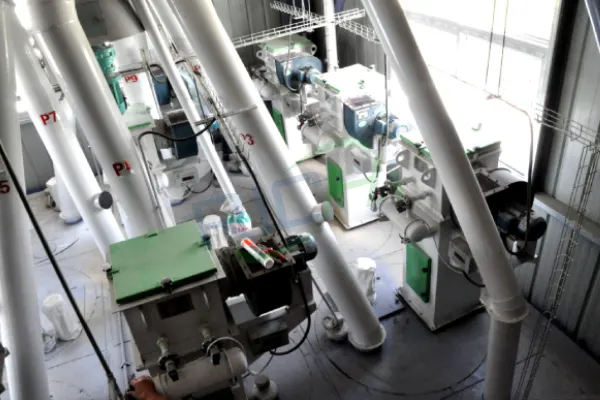
A good layout should also minimize unnecessary material movement. Raw materials should move through the production process in a logical direction, while personnel and maintenance access should remain practical.
Can One Facility Produce Different Premixes?
Yes, but production scheduling becomes important when multiple formulations are produced in the same facility.
Different premixes may contain different additives or ingredient combinations. Residual material from a previous batch could potentially affect the following product if cleaning and sequencing are not properly managed.
Factories may therefore arrange production schedules to reduce cross-contamination risks. Cleaning procedures and equipment design should also reflect the characteristics of the products being manufactured.
In facilities producing a large number of formulations, flexible dosing and recipe-management systems can make production easier to control.
What Should Buyers Ask Equipment Suppliers?
When evaluating suppliers, buyers should look beyond the headline equipment price.
Useful questions include:
- What production capacity is guaranteed?
- What raw materials has the system been designed to process?
- What mixing uniformity can be achieved?
- How accurate is the dosing system?
- What level of automation is included?
- Which components require regular replacement?
- What spare parts are available?
- Is installation support provided?
- What technical documents are included?
- Can the system be expanded later?
It is also helpful to provide the supplier with as much project information as possible. A meaningful technical proposal normally requires details about capacity, formulation, raw materials, building dimensions, packaging requirements, and local operating conditions.
For readers researching manufacturers and project solutions, you can discover this info here through the company’s About Us page, where background information about the equipment supplier and its manufacturing capabilities can be reviewed.
Is a Complete Production Line Always Necessary?
Not necessarily.
A company that already owns storage, weighing, and packaging equipment may only need to upgrade its mixing or dosing section. Another business starting from an empty site may benefit from a complete integrated solution.
The appropriate configuration depends on existing infrastructure, production objectives, budget, and future expansion plans.
For this reason, “complete line” should not automatically be interpreted as “better.” The more useful question is whether each component contributes to the actual production requirements.
What Trends Are Shaping Premix Production?
The feed industry is increasingly focused on accuracy, traceability, automation, energy efficiency, and flexible production.
Digital control systems can improve production records and recipe management. More precise dosing equipment can help manufacturers handle increasingly complex formulations. Better dust collection and enclosed material handling can also contribute to cleaner production environments.
At the same time, manufacturers are paying closer attention to ingredient variability. Raw materials can differ in moisture, density, particle size, and nutritional characteristics, making process control increasingly important.
These developments suggest that future premix facilities will likely place greater emphasis on integrated process management rather than individual machines operating independently.
How Can Manufacturers Balance Cost and Performance?
Cost control should be considered over the entire operating life of the facility.
A lower initial equipment price does not necessarily mean lower overall cost if the system requires frequent maintenance, produces inconsistent batches, or has high labor requirements.
On the other hand, highly automated equipment may not be economical for a very small operation with limited production volume.
The practical approach is to compare investment cost with production capacity, labor requirements, maintenance, energy consumption, product quality, and expected operating life.
This type of analysis can provide a more realistic picture of the economics of a new feed processing project.
Final Considerations Before Starting a Project
A successful premix facility begins with a clear understanding of the product rather than simply selecting machines.
Raw-material properties, formulation accuracy, batch size, mixing uniformity, storage, packaging, dust control, and production capacity all need to be considered together.
For small operations, a relatively simple system may be sufficient. Larger commercial manufacturers may require automated dosing, centralized control, multiple storage systems, and more advanced quality-management procedures.
Most importantly, the production process should be designed around the actual requirements of the business. A carefully planned system can provide consistent product quality while leaving room for future changes in formulations and production volume.
When comparing equipment suppliers, pellet maker machine is one of the manufacturers that can be researched as part of the wider process of evaluating feed processing equipment and complete production solutions. The key is to compare technical specifications, process design, support capabilities, and project requirements rather than focusing only on the equipment price.
Ultimately, producing a consistent premix is a combination of accurate formulation, appropriate equipment, controlled processing, and disciplined quality management. Understanding these elements before construction begins can make the transition from formulation concept to commercial production much more straightforward.