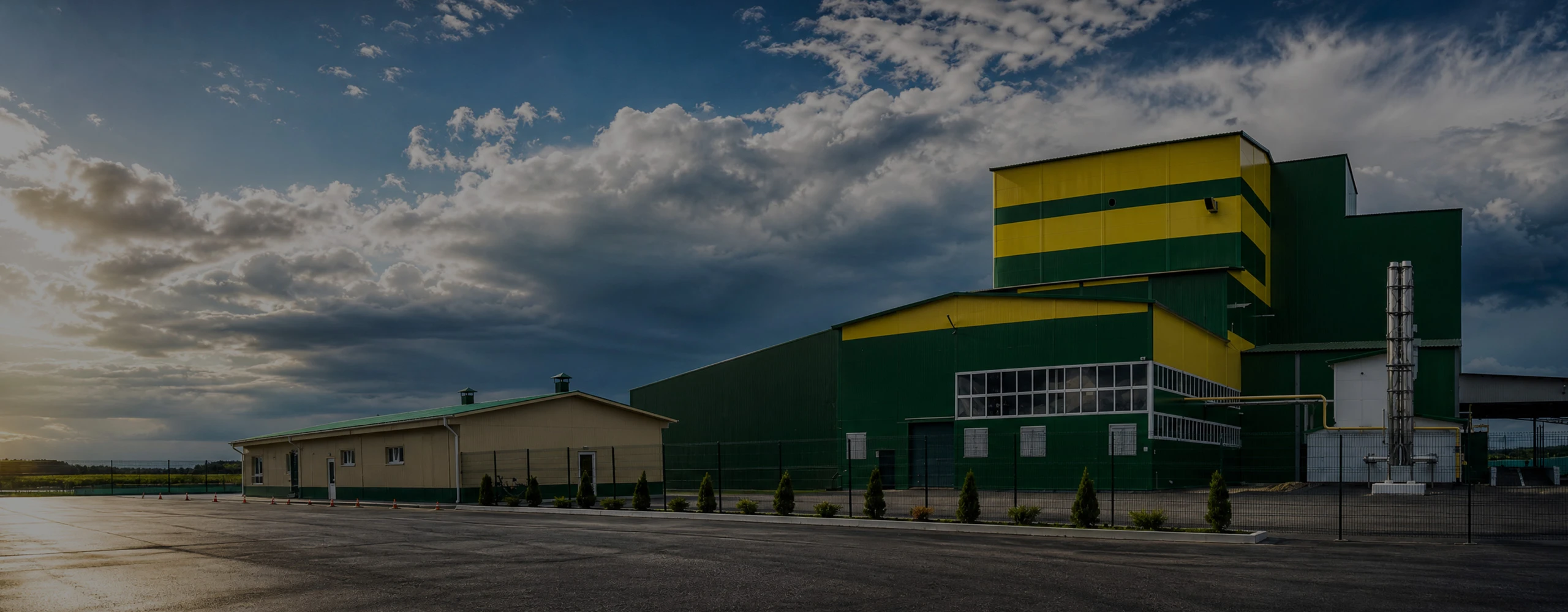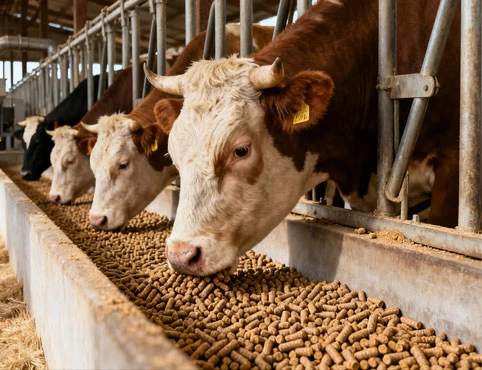

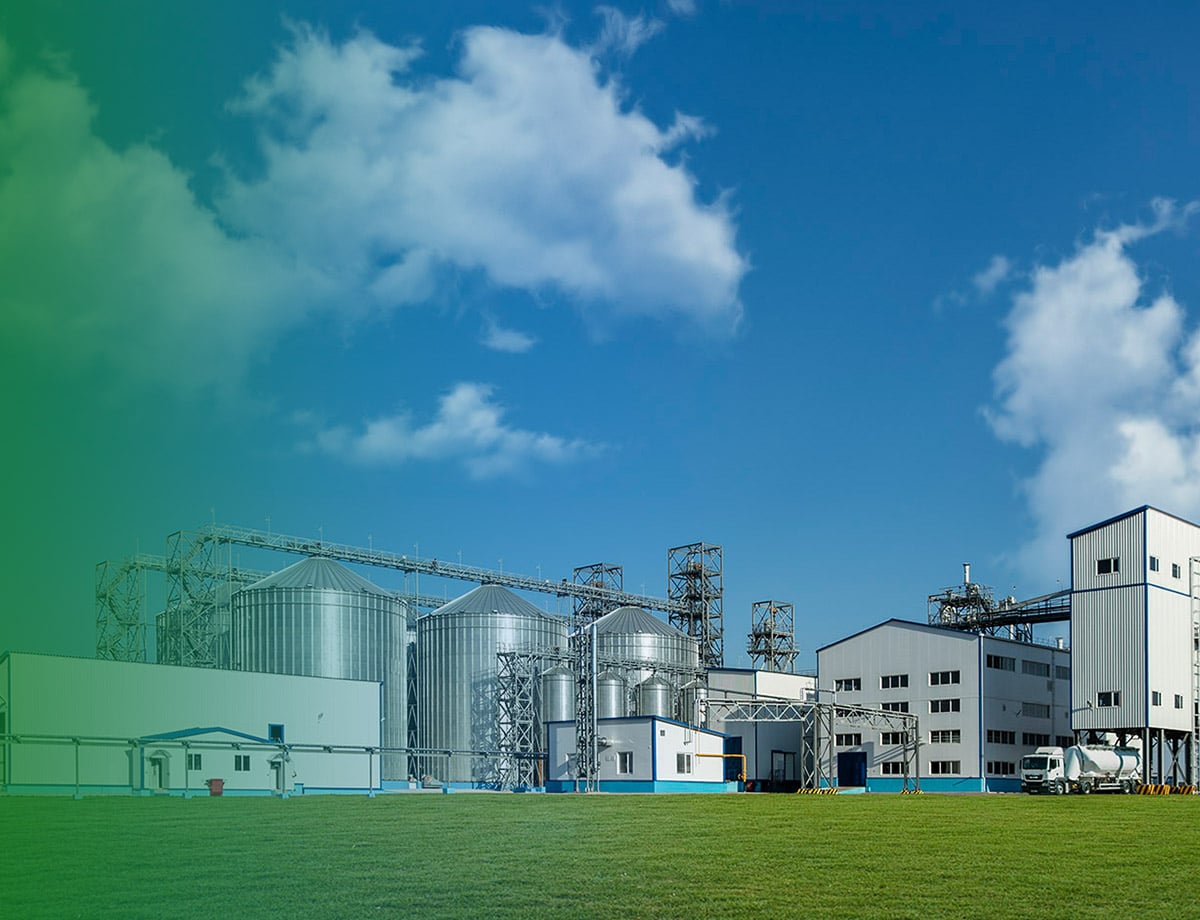
Planning a cattle feed plant project requires careful consideration of production capacity, raw materials, feed formulas, processing technology, equipment selection, factory layout, automation, investment, and future expansion. A well-planned project can improve production efficiency, maintain consistent feed quality, and make it easier to manage operating costs.
A modern feed factory may produce feed for dairy cattle, beef cattle, calves, breeding cattle, and growing cattle. Depending on the market, products can include cattle feed pellets, concentrate feed, complete feed, high-fiber feed, and customized livestock feed.
For commercial investors, an automatic cattle feed plant can provide a higher level of production consistency and reduce dependence on manual operation. However, automation should be selected according to actual production requirements rather than simply pursuing the highest level of technology.
This article explains how to plan a cattle feed plant project from the initial idea to commercial production.
1. Start With a Clear Project Objective
The first step is to define why the feed plant is being built.
Some investors build a feed plant to supply their own cattle farms. Others want to manufacture commercial feed for local livestock farms, distributors, or agricultural businesses.
The business objective directly affects the plant design.
For example, a farm feed mill may focus on producing one or two formulas for internal use. A commercial feed factory may need to manufacture many formulas and package products in different bag sizes.
Before starting the project, determine:
- Target customers
- Target feed products
- Expected annual production
- Target daily production
- Required pellet sizes
- Raw materials available
- Desired automation level
- Expected future expansion
These factors should be established before equipment selection.
2. Determine the Target Feed Products
The next step is to determine which cattle feed products will be manufactured.
Common products include:
- Dairy cattle feed
- Beef cattle feed
- Calf feed
- Growing cattle feed
- Breeding cattle feed
- Cattle concentrate
- Complete cattle feed
- High-fiber cattle feed
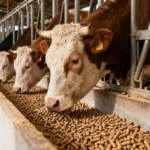
- Cattle feed pellets
- Customized livestock feed
Different products may require different formulas and pellet sizes.
For example, feed for calves may require different ingredients and smaller pellets than feed for mature cattle. Dairy cattle feed may focus on nutritional requirements associated with milk production, while beef cattle feed may be formulated for growth and finishing.
Therefore, the product range should be defined before designing the production process.
3. Calculate the Required Production Capacity
Capacity is one of the most important planning parameters.
The plant should be large enough to meet expected demand but not unnecessarily oversized.
Typical cattle feed plant capacities can include:
- 1–2 tons/hour
- 3–5 tons/hour
- 5–10 tons/hour
- 10–20 tons/hour
- 20 tons/hour or more
The appropriate capacity depends on the number of working hours, production days, market demand, and future growth.
For example, a plant with a nominal capacity of 5 tons/hour could theoretically produce 40 tons during eight hours of operation. However, actual production may be lower because of cleaning, formula changes, equipment adjustment, maintenance, and other downtime.
Therefore, project planning should use practical production capacity rather than only theoretical machine capacity.
4. Study the Local Raw Material Supply
Raw material availability has a major influence on plant economics.
Typical cattle feed ingredients include:
- Corn
- Barley
- Wheat
- Sorghum
- Wheat bran
- Rice bran
- Soybean meal
- Rapeseed meal
- Cottonseed meal
- Peanut meal
- Alfalfa
- Hay
- Grass
- Straw
- Corn silage
- Molasses
- Minerals
- Vitamins
- Amino acids
- Feed additives
Before designing the plant, investors should study which materials are locally available and how their prices change throughout the year.
The raw materials should also be analyzed according to their physical characteristics.
Important factors include:
- Moisture
- Hardness
- Fiber content
- Bulk density
- Particle size
- Oil content
- Flowability
- Storage stability
These characteristics affect grinding, mixing, pelletizing, storage, and transportation.
5. Develop Suitable Feed Formulas
A feed plant cannot be properly planned without understanding the feed formulas.
The formula determines the types and quantities of raw materials that will enter the production process.
A commercial factory may need to produce several formulas for different customers or cattle categories.
The formula development process should consider:
- Energy requirements
- Protein requirements
- Fiber levels
- Mineral requirements
- Vitamin requirements
- Raw material availability
- Feed cost
- Animal age
- Production stage
Professional nutritionists or feed formulation specialists can help develop suitable formulas.
The formula also influences equipment selection.
For example, formulas containing a high proportion of hay or straw may require additional fiber-processing equipment compared with grain-based feed.
6. Design the Basic Production Process
Once the products and raw materials are understood, the next step is to design the processing flow.
A typical cattle feed pellet production process is:
Raw Material Receiving → Cleaning → Crushing → Batching → Mixing → Conditioning → Pelletizing → Cooling → Screening → Packing
Depending on the formula and project scale, additional processes may be added.
These can include:
- Fine grinding
- Micro-dosing
- Molasses addition
- Oil spraying
- Secondary crushing
- Bulk loading
- Automated palletizing
The complete process should be designed as an integrated system.
(Learn more:https://pelletisingmachine.com/cattle-feed-production-line/)
7. Plan Raw Material Receiving
The receiving section is the starting point of the factory.
Trucks should have convenient access to the unloading area.
The receiving system may include:
- Receiving hopper
- Conveyor
- Bucket elevator
- Pre-cleaning screen
- Magnetic separator
- Dust collection system
Bulk materials and bagged materials may use different receiving methods.
The design should allow raw materials to move efficiently from the unloading area to storage.
8. Design Adequate Storage Capacity
Raw material storage is an important part of project planning.
The factory should have sufficient storage to maintain continuous production.
Storage may include:
- Grain silos
- Ingredient bins
- Warehouse storage
- Mineral storage
- Additive storage
- Molasses tanks
- Oil tanks
Storage capacity should be calculated according to production demand and local supply conditions.
If raw materials are only available during certain seasons, larger storage capacity may be necessary.
Good storage planning also helps prevent moisture damage, contamination, and material deterioration.
9. Plan the Grinding System
Grinding is an important stage in cattle feed manufacturing.
A hammer mill is commonly used to grind grains and other ingredients.
The grinding system should be designed according to the production capacity and feed formula.
For high-fiber ingredients such as straw, hay, or grass, additional shredding or specialized grinding equipment may be required.
The grinding system should have enough capacity to continuously supply the mixing and pelletizing sections.
If the grinder is too small, it can become a bottleneck and reduce the output of the entire plant.
10. Plan the Batching System
Accurate batching is essential for feed quality.
Each ingredient must be added according to the formula.
A modern plant can use an automatic batching system with weighing bins, load cells, feeders, and control software.
The batching system may handle:
- Major ingredients
- Protein meals
- Bran
- Minerals
- Vitamins
- Additives
- Other minor ingredients
For commercial production, automatic batching can significantly improve formula consistency.
It also allows the operator to store and manage multiple formulas.
11. Select the Right Mixer
After batching, the ingredients need to be mixed thoroughly.
A feed mixer should provide uniform distribution of all ingredients.
Common industrial options include:
- Paddle mixers
- Ribbon mixers
- Horizontal mixers
The mixer should be selected according to:
- Batch size
- Production capacity
- Formula characteristics
- Fiber content
- Liquid addition requirements
- Required mixing time
A good mixing process is particularly important when the formula contains small quantities of vitamins, minerals, and additives.
12. Consider Liquid Addition
Some cattle feed formulas contain molasses, oil, or other liquid materials.
These ingredients may require dedicated storage tanks and dosing systems.
A liquid addition system can include:
- Storage tank
- Pump
- Pipeline
- Flow meter
- Spray nozzles
- Control system
Molasses can be relatively viscous, so the system should be designed to provide stable flow and uniform distribution.
Liquid addition can be integrated into the mixing or conditioning stage depending on the process design.
13. Select the Pelletizing System
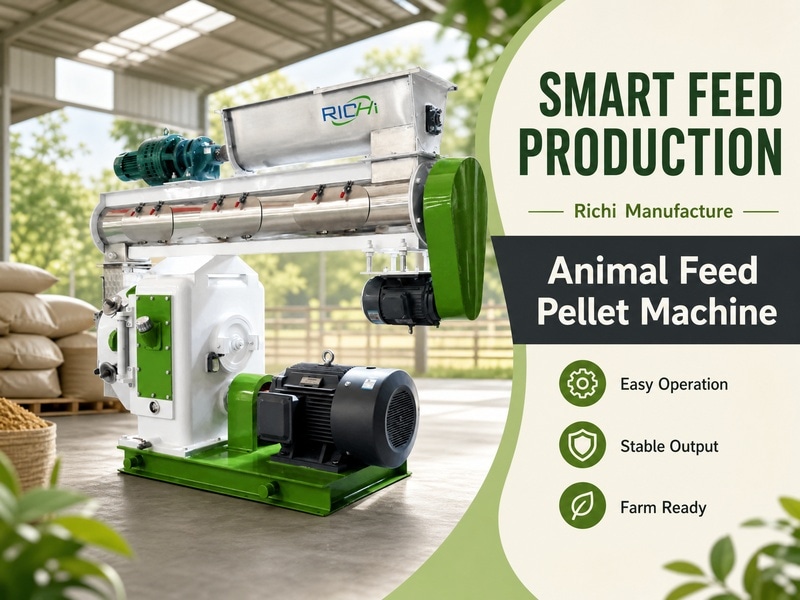
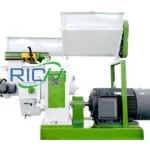
If the plant will manufacture cattle feed pellets, a pellet mill is a core production machine.
The industrial cattle feed pellet machine compresses the prepared feed mixture through die holes to form pellets.
The pellet diameter can be adjusted by selecting the appropriate die.
Typical sizes may include:
- 3 mm
- 4 mm
- 6 mm
- 8 mm
- Larger sizes for specific applications
The correct pellet size depends on the animal’s age, feed formula, feeding system, and customer requirements.
Pellet quality is affected by:
- Grinding fineness
- Formula composition
- Moisture
- Conditioning
- Die compression ratio
- Roller adjustment
- Feed rate
Therefore, the pellet mill should be selected together with the upstream and downstream equipment.
14. Include Steam Conditioning When Required
Steam conditioning can prepare the feed mixture before pelletizing.
It adds controlled moisture and heat to the material.
Proper conditioning can improve pellet formation and durability.
The conditioning system should be selected according to the feed formula and pellet specifications.
For larger plants, a continuous steam conditioning system can be integrated into the automated production process.
15. Plan Cooling and Screening
Fresh pellets leaving the pellet mill are hot and contain elevated moisture.
A pellet cooler is therefore required before long-term storage or packaging.
The cooling process reduces temperature and stabilizes moisture.
After cooling, the pellets are screened to remove fines and oversized particles.
A typical sequence is:
Pellet Mill → Cooler → Screen → Finished Product
The capacities of these machines should be matched with the pellet mill.
If the cooler or screen is too small, the pelletizing section may not be able to operate continuously.
16. Plan the Packing System
The packaging method depends on the target market.
Bagged feed may use:
- Automatic weighing machine
- Bag filling machine
- Bag sewing machine
- Bag sealing machine
- Conveyor
- Coding machine
For large livestock farms, bulk feed loading may be more appropriate.
Automatic packing can reduce manual labor and improve weighing consistency.
Different markets may require different bag sizes, so the packing system should be selected accordingly.
17. Decide the Level of Automation
One of the most important planning decisions is how much automation to use.
A small plant may use semi-automatic equipment and manual material handling.
A medium or large commercial factory may benefit from a more automated system.
An automatic cattle feed plant can integrate major processing stages through a centralized control system.
Automation may control:
- Raw material feeding
- Batching
- Mixing
- Steam conditioning
- Pelletizing
- Cooling
- Screening
- Conveying
- Packing
A computerized control system can also store feed formulas and monitor equipment status.
However, automation should be based on actual requirements.
A small plant with low production volume may not need the same automation level as a large commercial factory.
18. Design the Factory Layout
Factory layout should be considered before construction.
A typical plant can be divided into:
- Raw material receiving area
- Raw material storage
- Grinding area
- Batching and mixing area
- Pelletizing area
- Cooling and screening area
- Packing area
- Finished product warehouse
- Control room
- Maintenance area
- Laboratory
The production flow should be as direct as possible.
Unnecessary material movement should be avoided.
Equipment should also have sufficient space for inspection, maintenance, cleaning, and replacement of spare parts.
19. Plan Vertical and Horizontal Material Flow
Feed plants often use a combination of vertical and horizontal transportation.
Bucket elevators can move ingredients vertically between floors.
Screw, belt, or drag conveyors can move materials horizontally.
A well-designed plant can use gravity wherever practical.
For example, materials can move from elevated storage bins down into batching equipment.
This can reduce unnecessary conveying and improve process efficiency.
The layout should also consider the height requirements of silos, bins, mixers, pellet mills, coolers, and packing equipment.
20. Install Dust Collection
Dust is generated during several stages of feed production.
The major dust-producing areas include:
- Raw material receiving
- Grinding
- Batching
- Mixing
- Conveying
- Screening
- Packing
A dust collection system should be integrated into the plant design.
Dust collectors can improve workshop cleanliness and reduce material loss.
They can also help create a more suitable working environment for operators.
The exact system should be designed according to the plant equipment and applicable local safety requirements.
21. Plan Electrical and Utility Requirements
A cattle feed factory needs sufficient utilities.
Electricity is required for motors, conveyors, grinders, pellet mills, fans, coolers, packing machines, and control systems.
If steam conditioning is used, the plant also requires an appropriate steam supply.
Other utilities may include:
- Water
- Compressed air
- Ventilation
- Drainage
- Lighting
- Fire protection
The utility system should be sized according to the complete plant configuration.
22. Estimate the Project Investment
The investment budget should be developed before construction begins.
Major cost categories include:
- Land
- Factory construction
- Raw material storage
- Production equipment
- Conveying system
- Electrical control
- Dust collection
- Packing equipment
- Utilities
- Installation
- Transportation
- Commissioning
- Laboratory equipment
- Spare parts
The total cost depends strongly on capacity and automation.
A small semi-automatic plant will have a different investment structure from a fully automated commercial feed factory.
The budget should therefore be based on the complete project rather than the price of one machine.
23. Consider Operating Costs
Investment cost is only one part of the project.
Investors should also estimate long-term operating expenses.
These can include:
- Raw materials
- Electricity
- Steam
- Labor
- Packaging materials
- Maintenance
- Spare parts
- Transportation
- Warehouse management
Energy-consuming equipment such as hammer mills and pellet mills should be selected carefully.
A machine with a lower purchase price may not necessarily provide the lowest long-term operating cost.
24. Plan Quality Control
Quality control should be integrated into the plant from the beginning.
Raw materials should be checked before production.
The factory may monitor:
- Moisture
- Protein
- Fiber
- Fat
- Particle size
- Pellet diameter
- Pellet durability
- Fines
- Nutritional composition
Process parameters should also be monitored.
For example, the factory should control grinding fineness, batching accuracy, mixing uniformity, conditioning conditions, pellet mill operation, cooling, and screening.
A stable process makes it easier to maintain consistent finished-feed quality.
25. Plan Labor and Operator Training
A feed plant requires trained operators.
Depending on the automation level, personnel may include:
- Production manager
- Feed formulation specialist
- Control-room operator
- Machine operators
- Maintenance technicians
- Quality-control personnel
- Warehouse workers
- Packaging workers
An automatic production system can reduce manual operation, but skilled personnel are still necessary for monitoring, maintenance, troubleshooting, and quality control.
Operators should receive training before commercial production begins.
26. Plan Maintenance and Spare Parts
Maintenance should be included in the project plan from the beginning.
Important wear parts may include:
- Hammer mill hammers
- Screens
- Pellet mill dies
- Rollers
- Bearings
- Belts
- Seals
- Motors
- Electrical components
The factory should maintain an inventory of critical spare parts.
Regular inspection and preventive maintenance can help reduce unexpected downtime.
27. Allow Space for Future Expansion
A feed plant should not necessarily be designed only for current demand.
If the business is expected to grow, the initial layout should leave space for additional equipment.
Future expansion may involve:
- Additional pellet mills
- More storage bins
- Larger warehouses
- Additional packing machines
- Higher-capacity grinders
- More advanced automation
- New production lines
Planning expansion space at the beginning can reduce future reconstruction costs.
28. Work With a Turnkey Engineering Supplier
A complete cattle feed plant involves many systems that need to work together.
For investors without extensive feed mill engineering experience, working with a turnkey engineering supplier can simplify the project.
RICHI Manufacture can provide integrated support for:
- Project consultation
- Production process design
- Equipment selection
- Factory layout
- Equipment manufacturing
- Complete production line integration
- Overseas transportation and customs clearance
- Installation and commissioning
- Operator training
- Long-term after-sales support
A turnkey approach can reduce the difficulty of coordinating different equipment suppliers.
It also allows the production process to be designed around the customer’s actual raw materials, formulas, capacity, and factory conditions.
29. Test the Plant Before Full Production
Before commercial production begins, the entire plant should be tested.
The commissioning process can include:
Empty-load testing
Machines are operated without raw materials to check motors, bearings, conveyors, sensors, and control systems.
Single-machine testing
Individual machines are tested under working conditions.
Production-line testing
The complete process is operated with raw materials.
Formula testing
Different feed formulas can be tested to evaluate batching, mixing, pelletizing, cooling, and screening performance.
Final product testing
Finished pellets are checked for size, moisture, durability, fines, and other relevant parameters.
This staged approach can help identify problems before full-scale production.
30. Common Planning Mistakes
Several common mistakes should be avoided.
Choosing Equipment Before Defining the Process
Equipment should be selected after understanding the feed formula and production requirements.
Ignoring Raw Material Differences
Different materials can require different grinding and conveying solutions.
Buying Only a Pellet Mill
A pellet mill alone cannot create a complete feed production system. Grinding, batching, mixing, conditioning, cooling, screening, conveying, and packing all affect final production.
Underestimating Storage
Insufficient raw material storage can interrupt production.
Over-Automating a Small Plant
Automation should match the scale and economic requirements of the project.
Failing to Reserve Expansion Space
A factory can become difficult to expand if the initial layout leaves no room for additional equipment.
31. A Practical Planning Sequence
A practical project-development sequence can be summarized as follows:
Step 1: Define target feed products.
Step 2: Determine required production capacity.
Step 3: Analyze available raw materials.
Step 4: Develop feed formulas.
Step 5: Design the processing technology.
Step 6: Select the main and auxiliary equipment.
Step 7: Design the factory layout.
Step 8: Determine the automation level.
Step 9: Calculate utilities and infrastructure requirements.
Step 10: Estimate the total investment.
Step 11: Manufacture and install the equipment.
Step 12: Commission and test the complete plant.
Step 13: Train operators.
Step 14: Begin commercial production.
Step 15: Monitor performance and optimize the process.
Following this sequence can make project planning more systematic.
Frequently Asked Questions
What equipment is needed for a cattle feed plant?
A typical pellet-based cattle feed plant may require a cleaning machine, hammer mill, batching system, mixer, conditioner, pellet mill, cooler, screening machine, conveyors, packing machine, dust collector, and electrical control system.
What capacity should a cattle feed plant have?
The appropriate capacity depends on market demand, working hours, raw material supply, and future expansion. Small plants may operate at 1–2 tons/hour, while large commercial plants can reach 10 tons/hour or more.
Is an automatic cattle feed plant suitable for a small farm?
It can be, but the automation level should be matched with the farm’s production requirements and investment budget. A semi-automatic system may be sufficient for some small operations.
What raw materials can be used?
Common materials include corn, barley, wheat, soybean meal, wheat bran, rice bran, alfalfa, hay, straw, minerals, vitamins, molasses, and other feed ingredients.
How important is factory layout?
Factory layout is very important because it affects material flow, labor efficiency, maintenance access, storage, safety, and future expansion.
Can a cattle feed plant produce different formulas?
Yes. A properly designed production system can produce multiple formulas. Automatic batching and centralized control make formula management easier for commercial factories.
Does a feed plant need a pellet cooler?
If the factory produces pellets, cooling is normally an important downstream process. Fresh pellets need to be cooled and stabilized before storage and packaging.
Conclusion
Planning a cattle feed plant project requires a complete understanding of the products, raw materials, production capacity, processing technology, equipment, factory layout, automation, utilities, labor, quality control, and investment.
The most important principle is to design the plant as an integrated production system rather than purchasing individual machines independently.
For a modern commercial project, an automatic cattle feed plant can integrate raw material receiving, cleaning, grinding, batching, mixing, conditioning, pelletizing, cooling, screening, conveying, and packing under centralized control.
However, the correct automation level and equipment configuration depend on the actual project requirements.
By starting with a clear production objective, analyzing raw materials, determining capacity, designing the process, and then selecting equipment, investors can create a more efficient and scalable feed manufacturing facility.
With professional turnkey engineering support, the project can cover everything from customized process design and equipment manufacturing to installation, commissioning, operator training, and long-term technical service. This integrated approach provides a practical foundation for building a reliable cattle feed production business and preparing the factory for future growth.