



Rabbit feed costs rarely stay flat. Grain prices move with the harvest. Protein meals follow global markets. Even hay and fiber sources can swing sharply when weather cuts into yields. For farms that buy finished pellets, every price increase goes straight to the bottom line. For farms that mix their own feed, there is at least a chance to adjust, substitute, and source locally. But local ingredients bring their own set of problems, and those problems usually show up at the pellet mill.
The idea of using local ingredients sounds simple. Buy what is available nearby, mix it into a ration, and press it into pellets. In practice, the list of things that can go wrong is long. Nutrient balance shifts when a new batch of hay arrives. Moisture changes after a rain. Particle size varies from one supplier to the next. The pellet mill, which was supposed to solve a cost problem, suddenly becomes the source of a quality problem.
This article is about that gap. It is written for rabbit farmers, feed producers, and project planners who want to use local ingredients without sacrificing pellet quality or animal performance. The focus is not on a single machine. It is on the decisions that determine whether local-ingredient pelleting works or fails.
Why Local Ingredients Are Attractive but Difficult
The appeal of local ingredients is straightforward. They reduce transport cost. They support regional agriculture. They give the farm more control over what goes into the feed. In some cases, they turn a waste stream into a feed resource. Apple pomace, brewer’s grain, vegetable trimmings, and bakery waste have all been used in rabbit rations when they are available and affordable.
But local ingredients are not standardized. A commercial feed supplier buys ingredients to a specification. A farm buying from a neighbor buys whatever that neighbor has. The hay may be first cutting or second cutting. The grain may be dry or damp. The protein meal may be consistent one month and variable the next. That variability is the core challenge.
Rabbit digestion is sensitive to change. The gut microbiome adapts to a consistent diet. When the ration shifts suddenly, rabbits may eat less, grow slower, or develop digestive problems. A pellet that looks fine but contains a different nutrient profile than the last batch can cause more harm than a slightly more expensive commercial pellet.
The goal, then, is not simply to use local ingredients. It is to use them in a way that produces a consistent pellet with a predictable nutrient profile. That requires attention to formulation, processing, and quality control.
Common Local Ingredients for Rabbit Feed
Rabbit rations typically combine several categories of ingredients. Each category has different behavior in the pellet mill.
Fiber Sources
Fiber is the foundation of rabbit nutrition. It supports digestion and helps prevent enteritis. Common fiber sources include alfalfa hay, grass hay, straw, beet pulp, and bran. These ingredients are bulky and fibrous. They can improve pellet binding because the fibers interlock under pressure. But if the fiber is too coarse or too long, it creates weak points in the pellet. If it is too fine, it can clog the die.
Local fiber sources vary widely in quality. Alfalfa cut at the right stage is high in protein and highly digestible. Alfalfa cut late is stemmy and low in nutrients. A farm that sources hay locally may get excellent material one season and poor material the next. Testing the hay for protein, fiber, and moisture before mixing is not optional if the goal is a consistent pellet.
Energy Sources
Grains such as corn, barley, wheat, and oats provide energy. They also help bind the pellet because starch gelatinizes under heat and pressure. But grains vary in hardness and moisture. Corn that is too dry may shatter during grinding and create fines. Corn that is too wet may clog the mill. Local grain may also contain dust, broken kernels, or foreign material that affects pellet quality.
By-products such as wheat bran, rice bran, and corn gluten feed can replace part of the grain. They are often cheaper, but their nutrient content varies more than whole grains. A ration that works with one batch of bran may need adjustment when the next batch arrives.
Protein Sources
Soybean meal, sunflower meal, canola meal, and field peas are common protein sources. They are dense and tend to compress well. But they can also make the pellet harder than rabbits prefer. Local protein meals may be processed differently from batch to batch, which affects both nutrition and pelletability.
In some regions, animal-derived proteins are used, but their inclusion in rabbit feed is regulated and varies by market. Plant-based proteins are more common and generally easier to source consistently.
Minerals and Additives
Calcium, phosphorus, salt, and trace mineral premixes are added in small amounts. They are abrasive and can accelerate die wear if they are not evenly dispersed. Vitamin premixes are heat-sensitive, so conditioning temperature must be controlled to avoid degradation.
Local sources of minerals are rarely suitable for direct use. Mineral premixes are usually purchased from specialized suppliers. The challenge is not sourcing them but incorporating them uniformly into the mix.
Nutritional Balance: The Hard Part
Mixing local ingredients is not the same as following a fixed recipe. The nutrient content of each ingredient changes with variety, soil, weather, and storage. A ration that provides the right balance of protein, energy, fiber, and minerals one month may be deficient or excessive the next.
The standard solution is to test ingredients before mixing. A forage test for hay and a proximate analysis for grains and by-products provide the data needed to adjust the ration. This adds cost and time, but it is cheaper than a batch of feed that rabbits refuse to eat or that causes digestive problems.
Formulation software can help balance the ration, but the software is only as good as the data going in. If the hay test says 16% protein but the actual bale is 12%, the ration will be wrong. Sampling is not a one-time task. It is an ongoing practice.
Rabbit nutrition also changes with the stage of production. Growing rabbits need more protein and energy than maintenance animals. Breeding does have different requirements than grow-out rabbits. A single ration may not fit the whole herd. Local-ingredient pelleting works best when the farm can separate groups and mix rations that match their needs.
Processing Challenges: Grinding, Mixing, Moisture, and Pelleting
Even a well-formulated ration can fail at the pellet mill. The processing steps determine whether the nutrients in the mix actually reach the rabbit in a usable form.
Grinding
Local ingredients arrive in different particle sizes. Hay may be long and stringy. Grain may be whole or cracked. By-products may be fine or clumpy. A hammer mill reduces everything to a consistent particle size before mixing.
The target is not powder. It is a narrow distribution of particles that will bind well in the pellet. Large particles create weak points. Fine particles can clog the die. The screen size and rotor speed must be matched to the ingredients and the desired pellet diameter.
Mixing
A rabbit eats many pellets per day. Each pellet should deliver approximately the same nutrient profile. That requires a homogeneous mix. Local ingredients are often more difficult to mix than commercial premixes because they vary in density and flowability.
Light, fibrous ingredients tend to float. Dense minerals sink. A mixer that works well with one ration may struggle with another. The goal is a uniform blend that feeds into the pellet mill at a consistent rate and composition. Over-mixing can cause segregation. Under-mixing leaves pockets of concentrated nutrients. Both are problems.
Moisture and Conditioning
Moisture is the most common cause of pellet quality problems. Local ingredients are often stored in conditions that change with the weather. Hay absorbs moisture from humid air. Grain dries out in a dry spell. The moisture content of the mix may be different from one day to the next.
Conditioning—adding steam or water before pelleting—improves binding and reduces die wear. But conditioning must be controlled. Excess moisture can make rollers slip and reduce yield. Too little moisture leads to brittle pellets and excessive fines. The operator needs to monitor the material and adjust the conditioning accordingly.
Pelleting
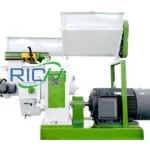
The pellet mill forms the pellet by forcing material through a die. The die’s thickness, hole diameter, and compression ratio determine the density and hardness of the finished pellet. Roller clearance affects how well the material is pressed into the die. Motor power affects throughput and consistency.
A rabbit feed pellet machine can be adjusted to some extent. Die selection, roller pressure, and feed rate can be tuned. But these adjustments cannot overcome fundamental problems with the formulation or preprocessing. If the mix is too wet, too dry, too coarse, or poorly blended, the machine will struggle.
Cooling and Storage
Pellets leave the die hot and moist. They must be cooled gradually to prevent cracking and to bring moisture down to a safe storage level. Pellets that are cooled too quickly become brittle. Pellets that are not cooled enough remain soft and prone to mold.
Local ingredients can increase the risk of mold because they may carry more spores or have higher moisture variability. Storage in a dry, ventilated area is essential. Pellets that are stored in humid conditions can absorb moisture and lose quality within weeks.
When On-Farm Pelleting Fits
On-farm pelleting makes sense when several conditions are present. The farm consumes enough feed to justify the capital and operating cost of a pellet line. Local ingredients are available at a cost that makes home production cheaper than purchasing finished pellets. The farm has the labor and technical capacity to manage grinding, mixing, moisture control, and cooling consistently. And the rabbits benefit from a pellet that matches their nutritional requirements more closely than a generic commercial product.
It makes less sense when feed volumes are small, ingredient sourcing is unreliable, or the farm lacks the labor to manage the process. In those cases, the cost and complexity of on-farm pelleting may exceed the savings. A farm that buys finished feed at a reasonable price may not gain enough from home production to justify the investment.
The decision is not about whether a machine is a good investment in the abstract. It is about whether the farm’s feed situation—volume, cost, ingredient access, and labor—makes the investment worthwhile. A farm that currently buys bagged feed at retail prices has a different starting point than a farm that already mixes its own mash.
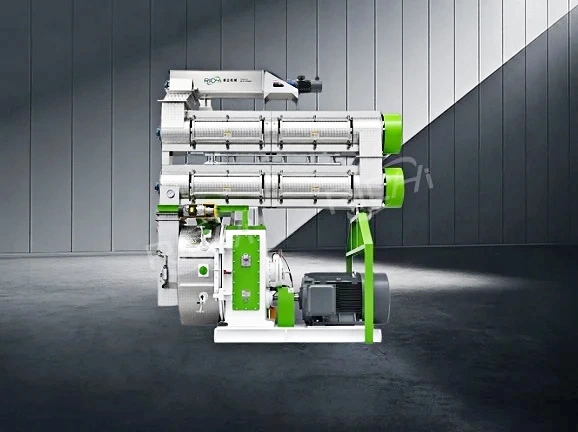
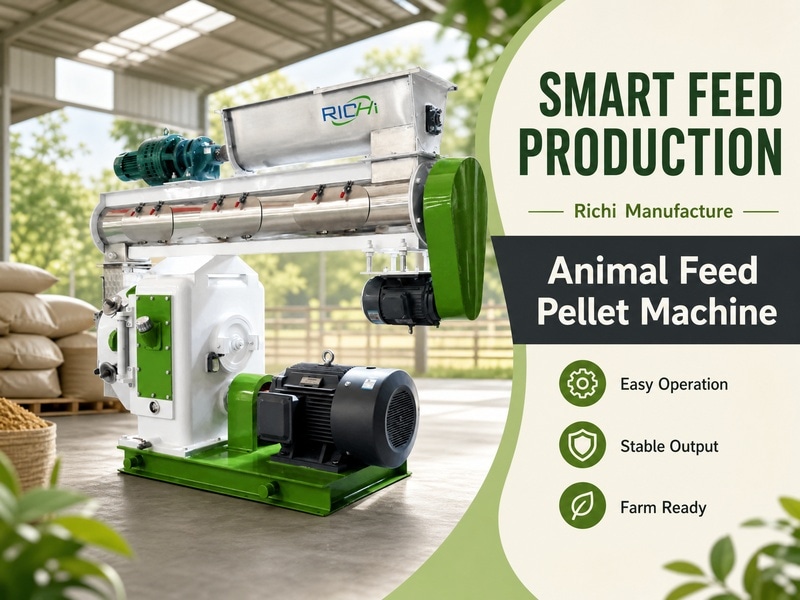
For operations that want to use local ingredients but are not ready for a full pellet line, there are intermediate options. A rabbit feed pellet machine for farm-made feed can be integrated into an existing feed mixing system. The configuration depends on the farm’s production flow, the ingredients available, and the desired pellet quality. Starting with a smaller line and expanding later is often more practical than investing in a large system before the process is understood.
Cost and Scale Considerations
The purchase price of the pellet mill is only one part of the total cost. A realistic budget must account for the entire production chain.
Capital cost. A complete line may include a grinder, mixer, conditioner, pellet mill, cooler, screener, and bagging equipment. The pellet mill itself may represent only part of the total. Local ingredients may require more grinding and screening than commercial premixes, which adds cost.
Energy cost. Pelleting is energy-intensive. Grinding, mixing, conditioning, and pelleting all consume power. Energy cost per tonne varies with ingredient hardness, moisture, and pellet diameter. In regions with high electricity prices, energy can be a significant operating cost.
Labor. A pellet line requires operators to feed material, monitor moisture, change dies, perform maintenance, and manage storage. The labor requirement depends on the level of automation. A small farm-scale line may need one operator. A larger line may need two or three.
Maintenance and wear parts. The die and rollers are consumables. Their lifespan depends on the abrasiveness of the ingredients, moisture consistency, and operating practices. Local ingredients that contain sand or grit will wear dies faster than clean commercial premixes. Budgeting for regular die replacement is part of normal operating cost.
Feedstock cost. This is the decisive variable. If the local ingredients are already being produced on the farm or purchased at low cost, the savings can be significant. If they must be purchased, transported, and processed, the economics change. Pelleting only makes sense if the input ingredients are available at a cost that, after processing, is lower than the cost of purchasing finished pellets.
The break-even point is different for every farm. A farm that currently pays retail prices for rabbit pellets has a different starting point than a farm that already mixes its own feed. A farm that can source ingredients locally at low cost has a different revenue potential than a farm that must import feed.
Common Mistakes in Local-Ingredient Pelleting
Several mistakes appear again and again in farm-scale pellet projects. Avoiding them can save significant time and money.
Skipping ingredient testing. Local ingredients vary. A ration that worked last month may be deficient this month. Testing is the only way to know.
Underestimating grinding. A pellet mill cannot compensate for inconsistent particle size. If the ingredients are not ground uniformly, the pellets will be inconsistent and prone to breakage.
Ignoring moisture variation. Ingredients stored in different conditions have different moisture levels. A formulation that pellets well one week may clog the die the next. Moisture monitoring and adjustment are not optional.
Cooling too quickly or not enough. Pellets that are cooled too fast become brittle. Pellets that are not cooled enough remain soft and may mold. Cooling is a controlled step, not a passive one.
Using a die that is worn or mismatched. Die condition and specification affect pellet density, hardness, and throughput. A worn die produces inconsistent pellets. A die that is too thick for the formulation may produce pellets that are too hard for rabbits to chew.
Assuming that local is always cheaper. Local ingredients can be cheaper, but they can also be more variable and require more processing. The full cost per tonne is what matters, not the price per kilogram of raw material.
A Practical Way to Think About the Decision
For a farm considering whether to use local ingredients and produce its own rabbit feed pellets, the decision can be framed in a few practical steps.
First, measure the current feed cost and feed waste. Collect the fines from feeders and floors for a week and estimate what percentage of purchased feed is not consumed. That number is the baseline the farm is trying to improve.
Second, assess the local ingredient supply. Identify the ingredients that are available, their cost, their nutrient content, and their variability. Test representative samples before committing to a ration.
Third, define the target pellet. Determine the desired pellet diameter, durability, and moisture content based on the rabbit herd’s requirements and the feeding system.
Fourth, evaluate the production system. Determine whether grinding, mixing, conditioning, pelleting, and cooling can be managed consistently with available labor and technical support.
Fifth, calculate the full cost. Include capital, energy, labor, maintenance, and ingredient cost. Compare the cost per tonne with the cost of purchased feed and the value of reduced waste.
If those steps produce a clear picture, the equipment decision becomes straightforward. If they do not, the project is not ready for equipment procurement.
For farms that want to understand how a full feed production line is configured—including equipment for different species and production scales—it is worth spending time with a manufacturer that offers turnkey service. Companies like Richi machinery manufacture that serve multiple species and production scales often provide practical guidance on system configuration.
The Bottom Line
Local ingredients can reduce feed costs and give rabbit farms more control over their ration. But they also introduce variability that must be managed. Nutrition, grinding, mixing, moisture, pelleting, cooling, and storage all affect whether the final pellet is eaten or wasted.
Farms that succeed with local-ingredient pelleting tend to be the ones that treat it as a production system. They test ingredients, monitor moisture, grind consistently, and cool properly. They understand that a pellet the rabbit eats is worth more than a pellet that looks good in the bag.
That is the standard against which any pellet project should be measured: not whether the machine runs, but whether the rabbits eat what the farm produces.