
Starting an organic fertilizer pellet production business is one of the most promising opportunities in today’s agricultural and environmental industries. As global farming practices shift toward sustainability, the demand for organic fertilizer continues to grow rapidly. Farmers, distributors, and governments are increasingly encouraging the use of eco-friendly fertilizers that improve soil health while reducing chemical dependency.
This guide explains step-by-step how to start an organic fertilizer pellet production business, covering raw materials, production technology, equipment selection, business planning, and marketing strategies. A key component of this business is the fertilizer pellet making machine, which plays a central role in converting raw organic waste into valuable commercial fertilizer pellets.
1. Understanding the Organic Fertilizer Market
Before starting any business, it is essential to understand the market demand and industry trends.
1.1 Growing Demand for Organic Fertilizer
- Rising awareness of soil degradation
- Increasing adoption of organic farming
- Government subsidies for sustainable agriculture
- Restrictions on chemical fertilizer usage in many countries
These factors create strong demand for organic fertilizer pellets globally.
1.2 Market Opportunities
- Local agricultural markets
- Export opportunities
- Large-scale farms
- Gardening and landscaping industries
Organic fertilizer pellets are used across multiple sectors, making this a highly diversified market.
2. Business Planning and Feasibility Study
A solid business plan is the foundation of success.
2.1 Key Questions to Answer
- What is the target market?
- What production capacity is needed?
- What raw materials are available locally?
- What is the estimated investment budget?
- Who are the competitors?
2.2 Feasibility Analysis
A feasibility study should evaluate:
- Raw material supply stability
- Transportation costs
- Labor availability
- Equipment investment
- Profit margin estimation
A well-prepared plan reduces risk and improves decision-making.
3. Selecting Raw Materials
The quality and cost of raw materials directly affect profitability.
3.1 Common Raw Materials
- Animal manure (cow, chicken, pig, sheep)
- Crop residues (straw, husk, corn stalks)
- Food waste
- Industrial organic by-products
3.2 Material Considerations
- Moisture content
- Carbon-to-nitrogen ratio
- Availability and cost
- Local regulations
Choosing abundant local materials significantly reduces production costs.
4. Organic Fertilizer Production Process Overview
The production process typically includes:
- Raw material collection
- Fermentation and composting
- Crushing and mixing
- Moisture adjustment
- Pelletizing using a fertilizer pellet making machine
- Drying
- Cooling
- Screening
- Packaging
Each step contributes to producing high-quality fertilizer pellets suitable for agricultural use.
5. Importance of Fermentation in Production
Before pelletizing, raw organic materials must be fully composted.
5.1 Purpose of Fermentation
- Kill harmful pathogens
- Decompose organic waste
- Stabilize nutrients
- Eliminate odor
5.2 Fermentation Conditions
- Temperature: 55°C–70°C
- Duration: 10–30 days
- Oxygen supply: regular turning or aeration
Proper fermentation ensures safe and effective fertilizer production.
6. Crushing and Mixing System
After fermentation, materials must be processed into uniform form.
6.1 Crushing
A crusher breaks down large clumps into fine powder, improving consistency.
6.2 Mixing
A mixer blends:
- Different organic materials
- Additives such as minerals or microbial agents
This ensures balanced nutrient distribution across all pellets.
7. Moisture Control
Moisture content is critical in pellet production.
- Ideal moisture: 20%–30%
If moisture is too high:
- Pellets become soft and unstable
If moisture is too low:
- Pellets cannot form properly
Proper moisture adjustment ensures efficient operation of the fertilizer pellet making machine.
8. Choosing the Right Fertilizer Pellet Making Machine
The fertilizer pellet making machine is the most important equipment in the entire production line. It directly determines pellet quality, production efficiency, and operational cost.
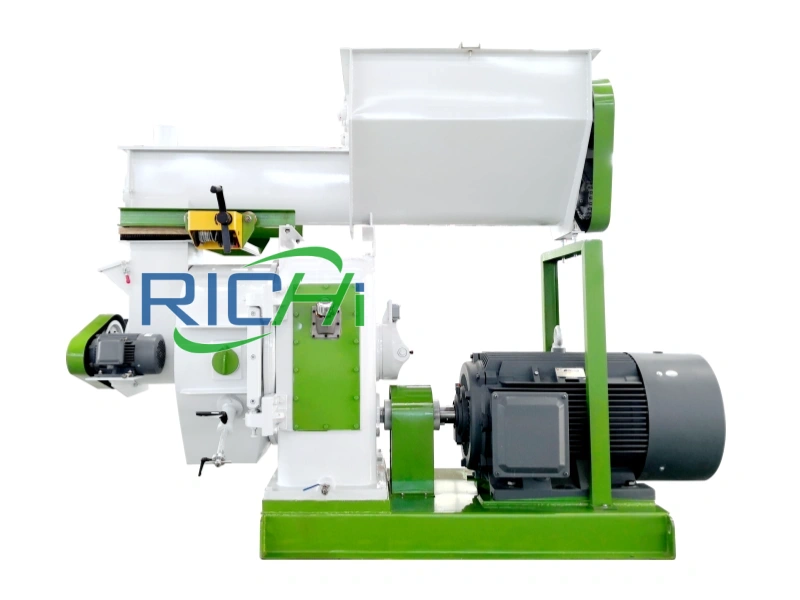
https://richipelletizer.com/organic-fertilizer-pellet-machine
8.1 Types of Machines
1. Flat Die Fertilizer Pellet Machine
- Suitable for small businesses
- Lower investment cost
- Easy to operate
2. Ring Die Fertilizer Pellet Machine
- Suitable for large-scale production
- High output capacity
- Stable and durable performance
3. Vertical Fertilizer Pellet Machine
- Integrates mixing and pelletizing
- Suitable for high-moisture materials
- Compact design
8.2 Selection Factors
When choosing a machine, consider:
- Production capacity requirements
- Raw material characteristics
- Budget constraints
- Maintenance availability
- Energy consumption
Investing in the right machine ensures long-term profitability.
9. Pelletizing Process
This is the core stage of the business.
The fertilizer pellet making machine compresses organic material into uniform pellets through mechanical pressure and friction.
9.1 Process Steps
- Feeding raw material into machine
- Compression through die system
- Formation of cylindrical pellets
- Cutting into uniform length
9.2 Advantages
- Consistent pellet size
- High production efficiency
- Reduced dust pollution
- Easy storage and transport
This process transforms waste into a valuable commercial product.
10. Drying and Cooling Systems
10.1 Drying
Fresh pellets contain moisture and must be dried using a rotary dryer.
Benefits:
- Prevent spoilage
- Increase shelf life
- Improve hardness
10.2 Cooling
Cooling stabilizes pellets and prevents deformation.
Benefits:
- Enhances durability
- Reduces moisture reabsorption
- Improves packaging quality
11. Screening and Packaging
11.1 Screening
A vibrating screen removes:
- Oversized particles
- Broken pellets
- Powder residues
Rejected materials are recycled back into production.
11.2 Packaging
Finished pellets are packed in:
- Small retail bags (10–25 kg)
- Large agricultural bags (50 kg or bulk)
Automated packaging systems increase efficiency and reduce labor costs.
12. Investment Cost Estimation
Starting an organic fertilizer pellet business requires investment in several areas:
12.1 Main Costs
- Fertilizer pellet making machine
- Crushing and mixing equipment
- Drying and cooling systems
- Factory construction
- Labor and utilities
12.2 Cost Range
Small-scale plant:
- $10,000 – $50,000
Medium-scale plant:
- $50,000 – $200,000
Large-scale plant:
- $200,000+
13. Profitability Analysis
Profit depends on:
- Raw material cost (often very low or free)
- Production efficiency
- Market selling price
- Transportation and packaging costs
Organic fertilizer pellets typically have high profit margins due to low raw material costs and strong market demand. (site link)
14. Marketing Strategies
A strong marketing strategy ensures business success.
14.1 Target Customers
- Farmers
- Agricultural cooperatives
- Garden centers
- Landscaping companies
14.2 Marketing Channels
- Online platforms
- Agricultural exhibitions
- Local distributors
- Government agricultural programs
14.3 Branding Strategy
- Emphasize eco-friendliness
- Highlight soil improvement benefits
- Promote organic certification
15. Challenges in the Business
15.1 Common Challenges
- Raw material inconsistency
- Machine maintenance issues
- Market competition
- Seasonal demand fluctuations
15.2 Solutions
- Secure stable raw material sources
- Regular machine maintenance
- Diversify product types
- Expand into multiple markets
Proper management ensures long-term stability.
16. Role of Fertilizer Pellet Making Machine in Business Success
The fertilizer pellet making machine is the core asset of the entire business model. It determines:
- Production capacity
- Pellet quality
- Energy consumption
- Labor requirements
- Overall profitability
A high-quality machine reduces downtime and improves return on investment. For entrepreneurs, selecting the right machine is often the difference between success and failure in this industry.
17. Future Development Trends
The organic fertilizer industry is evolving rapidly:
- Automation and smart production lines
- Energy-efficient machinery
- Integration of AI monitoring systems
- Increased global demand for organic farming
Businesses that adopt advanced technology will have a competitive advantage.
Conclusion
Starting an organic fertilizer pellet production business is a profitable and sustainable opportunity in the modern agricultural industry. With increasing global demand for eco-friendly farming solutions, this business offers strong long-term growth potential.
From raw material selection and fermentation to pelletizing with a fertilizer pellet making machine, each step plays an essential role in ensuring product quality and operational efficiency.
By combining proper planning, reliable equipment, and effective marketing strategies, entrepreneurs can build a successful organic fertilizer production business that not only generates profit but also contributes to environmental sustainability and soil health improvement worldwide.