
Ask any poultry farmer what keeps them up at night, and the answers are usually the same. Feed prices. Disease outbreaks. Market volatility. But there’s another answer that almost never gets mentioned—the growing mountain of waste behind the barn. It doesn’t make the headlines, but it gnaws away at profits every single day, quietly consuming time, labor, and money.
Here’s an uncomfortable truth: every bag of feed you buy eventually comes out the other end of your birds. That’s not a failure. That’s biology. But what if that cycle didn’t have to end with a disposal problem? What if the nutrients in that manure could be captured, concentrated, and sold? What if, instead of costing you money, that waste stream could actually help pay for the next load of feed?
This isn’t a hypothetical question. It’s already happening on farms around the world. And the technology that makes it possible is simpler, more affordable, and more accessible than most farmers realize.
The Hidden Economics of Chicken Litter
The numbers are worth paying attention to. A typical broiler produces roughly one pound of litter per bird per cycle. If you’re running a 10,000-bird operation with five cycles a year, that’s 50,000 pounds—about 23 tons—of raw manure annually. In many regions, just having that waste hauled away costs $30 to $50 per ton. That’s $700 to $1,150 per year in disposal costs for a relatively modest operation.
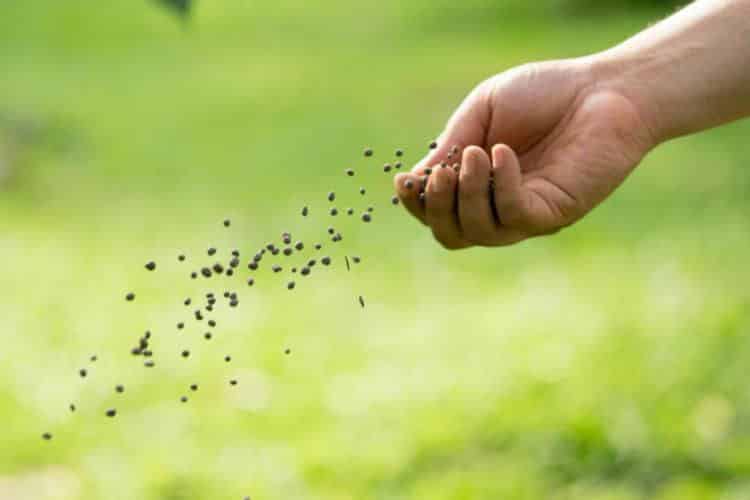
But here’s the other side of the equation. That same 23 tons of raw manure contains roughly 1,500 pounds of nitrogen, 1,000 pounds of phosphorus, and 700 pounds of potassium—nutrients that commercial farmers pay premium prices for in synthetic fertilizers. When processed into dry, stable pellets, that manure can command $200 to $400 per ton on the organic fertilizer market. Suddenly, that 23-ton liability becomes $4,600 to $9,200 in annual revenue.
The math is simple. The manure is being produced whether you want it or not. The only question is whether you’re going to pay to get rid of it or get paid to sell it. For farmers who make the switch, the savings from avoided disposal costs combined with new revenue often exceeds $10,000 per year for a mid-sized operation. That’s money that goes straight to the bottom line.
From Problem to Product
The transformation from smelly manure to clean, marketable pellets isn’t magic. It’s a straightforward mechanical process that uses heat, pressure, and precision engineering. The basic principle is the same as the meat grinder in a kitchen, scaled up and optimized for agricultural waste.
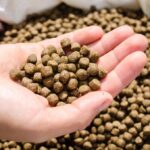
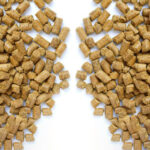
Raw poultry litter is collected from the barn, usually mixed with some bedding material like rice hulls, wood shavings, or straw. This mixture is then dried to reduce moisture content—this is critical because wet manure won’t form stable pellets. The dried material is ground to a uniform particle size and fed into a machine that compresses it through small holes in a metal die. The friction generates heat, which melts the natural lignin in the material and acts as a glue, binding the particles into dense, solid pellets.
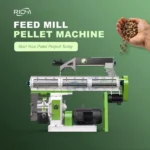
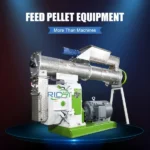
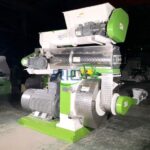
For commercial-scale operations dealing with continuous litter production, a chicken litter pellets processing machine is the right tool. These machines are heavy-duty units built to withstand the abrasive nature of poultry manure. The ring-die design delivers high throughput and consistent pellet quality. The forced feeder prevents clogging from fibrous materials like straw or feathers. The hardened steel components resist wear from the silica in the feed. A machine of this class can process several tons per hour, making it suitable for large operations, commercial fertilizer plants, or biomass fuel producers. For a mid-sized grow-out farm producing 50 tons of litter annually, a one-ton-per-hour unit is usually sufficient.
The Compact Option for Small Producers
Not every poultry farmer is running thousands of birds. Small-scale producers, homesteaders, and farmers with diversified operations also need solutions. The economics are different at this scale, but the opportunity is just as real.
A household poultry manure pellet machine is the compact answer for these producers. These machines typically process 50 to 150 kilograms per hour and run on single-phase household electricity. They require minimal floor space and can be installed in a garage, shed, or utility room. The investment is modest—typically well under $3,000—which makes them accessible even for operations with tight budgets.
The economics at this scale are surprisingly good. A flock of 500 chickens produces roughly 500 pounds of manure per week, or about 13 tons annually. At current hauling rates, disposal would cost around $500 per year. Using a small pellet machine, that same manure can be processed into high-quality pellets that sell for $200 to $300 per ton. That’s $2,600 to $3,900 in potential annual revenue. The machine pays for itself in the first year, and every year after that is pure profit. For a small farmer, that’s the difference between breaking even and making a real profit.
A Backyard Transformation
Consider what happened in a small community in rural New South Wales. A retired couple kept a flock of about 800 layer hens for egg sales. They were happy with their operation—sales were steady, the neighbors liked the fresh eggs, and life was good. But the manure pile was a growing problem. Their small tractor couldn’t spread it fast enough. The smell was becoming an issue in the summer. They were considering cutting back their flock just to reduce the waste.
Instead, they took a chance. They bought a small household poultry manure pellet machine and started experimenting. At first, they just wanted to reduce the volume and odor. But when they showed samples to a local vegetable grower, they were surprised by the interest. Soon they were producing pellets for three nearby organic farms. Within a year, they had become the area’s go-to supplier for organic fertilizer. The pellet operation now generates enough income to cover all their feed costs for the chickens. In effect, the birds are producing their own feed—paying their own bills, as the title suggests.
The couple still sells eggs, but the manure pellets have become the real profit center. Their operation has expanded to include a small drying setup and automated packaging. They’re now looking at adding a second machine to keep up with demand. All of this started because they asked themselves a simple question: what if this waste was actually valuable?
Why Equipment Quality Matters
The biggest mistake first-time buyers make is choosing equipment based on price alone. Cheap machines often have cheap components—dies that wear out in weeks, motors that overheat, frames that crack under stress. The downtime and frustration quickly outweigh any initial savings. And in a business where consistency matters, unreliable equipment is a liability.
This is particularly true for poultry manure, which is more demanding on equipment than almost any other organic material. The high silica content from chicken feed acts as an abrasive, wearing down dies and rollers much faster than other feedstocks. The feathers and bedding fibers can cause blockages if the feeder isn’t designed properly. The moisture content varies significantly from summer to winter, requiring flexibility in the machine’s operation.
For these reasons, manufacturers with experience in this specific application are the safest choice. One such company is Richi Pelletizer, which has developed a reputation for building robust equipment tailored to poultry litter processing. Their machines include oversized bearings, heat-treated alloy dies, and advanced feeding mechanisms that handle fibrous materials without clogging. The control systems allow operators to adjust parameters in real time, compensating for variations in the feedstock. Most importantly, they offer comprehensive technical support and training—invaluable resources for first-time operators who are learning the craft.
The Growing Market Opportunity
The market for processed poultry manure is expanding rapidly. Three major trends are driving this growth.
First, organic farming is booming globally. Certified organic operations require approved fertilizer sources, and processed manure pellets are one of the most cost-effective options. The demand from vegetable growers, fruit orchards, and high-value crops is consistently strong.
Second, the shift toward renewable energy is creating demand for biomass fuel pellets. Poultry litter pellets burn cleanly and have a calorific value comparable to wood pellets. They are used in industrial boilers, greenhouse heating, and even residential pellet stoves in some regions.
Third, environmental regulations are tightening. Governments around the world are cracking down on nutrient runoff and methane emissions. Processed manure pellets are a recognized best practice for reducing these environmental impacts.
For farmers who can produce pellets that meet quality standards—consistent size, low moisture, clean appearance—the market is waiting. Building relationships with local nurseries, garden centers, and organic farms is usually the easiest starting point. As production volume grows, larger buyers like fertilizer distributors and biomass energy companies become viable options.
View more:https://pelletizerextruder.com/chicken-manure-pellet-machine/
The Five-Step Path to Success
Entering the pellet business isn’t complicated, but it does require planning. Here’s a simple roadmap:
Step one: quantify your feedstock. How much manure are you producing, and what are its moisture and nutrient characteristics? This will determine the equipment size and drying requirements.
Step two: investigate local market demand. Who is buying organic fertilizer or biomass fuel in your region? What specifications do they require? What price are they paying?
Step three: choose equipment that matches both your feedstock and your market. Don’t oversize or undersize. Look for quality and support, not just the lowest price.
Step four: start small and learn. Process trial batches, test quality, and get market feedback. Refine your process before scaling up.
Step five: expand gradually. As your reputation builds and demand grows, invest in additional equipment or capacity.
The Bottom Line
The question that opened this article wasn’t rhetorical. Your chickens can, in fact, pay their own feed bills. Not directly, of course—they can’t carry cash to the feed store. But the manure they produce, when processed into high-quality pellets, generates revenue that can offset or even exceed your feed costs. For many farmers, this has proven to be one of the most profitable side businesses they’ve ever started.
The technology is proven. The equipment is available. The markets are growing. And the raw material is sitting right behind your barn, waiting to be put to work. The only real question is whether you’ll seize the opportunity or watch your neighbors do it first.
For those interested in exploring this further, click to find out more about equipment specifications, setup requirements, and real-world case studies. The waste that’s been costing you money could be the investment that changes everything.


